
Strategy / experience / operations
eCommerce development that connects sales, catalogue and day-to-day operations.
We design and develop eCommerce that makes buying easier and day-to-day operations more dependable, using WooCommerce, OpenCart or custom architecture with tailored UX/UI, integrations, technical SEO, GEO, performance and support after launch.
From commercial model to support
What does professional eCommerce development include?
Firstidea can own the complete journey. The eight areas below become explicit deliverables and responsibilities within the project proposal.
- 01
Commerce strategy and scope
Objectives, audiences, catalogue, margins, logistics and responsibilities are clarified before any platform decision.
- 02
Catalogue architecture
Categories, attributes, variants, filters and search are organised around the way customers actually look for products.
- 03
Custom UX/UI and conversion
Mobile-first journeys for category, product, basket and checkout, with clear information and no unnecessary friction.
- 04
WooCommerce, OpenCart or custom build
Technology follows operations, content, integrations and existing investment rather than agency habit.
- 05
Payments, delivery and policies
Gateways, couriers, tax, returns and customer communication form one consistent ordering experience.
- 06
ERP, CRM, feeds and marketplaces
Integrations gain a source of truth, clear ownership, monitoring and defined handling for failures and exceptions.
- 07
Commerce SEO, GEO and analytics
Taxonomy, structured data, performance and consent-aware measurement are built into the store’s foundation.
- 08
Migration, QA, training and support
Data, URLs and real order scenarios are checked before launch, followed by documentation and ongoing technical care.
4 selected eCommerce case studies
Four different catalogues. Four different operational decisions.
This is only a small sample of our portfolio. These case studies show real WooCommerce, OpenCart and B2B work — without generic claims or invented performance results.
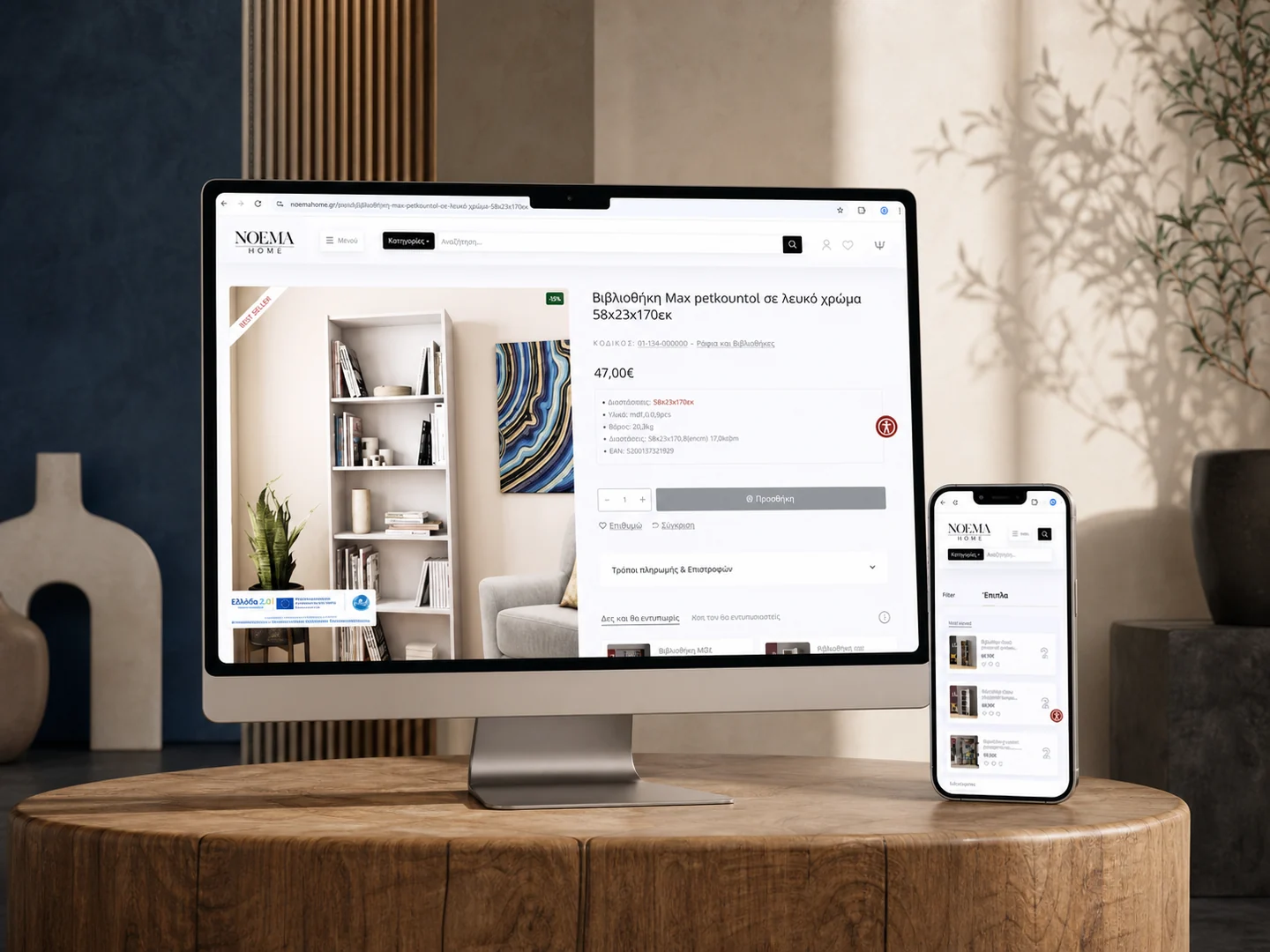
Noema Home
A bilingual furniture catalogue with filters, accessibility-led design and automated product feeds.
View the case study ↗︎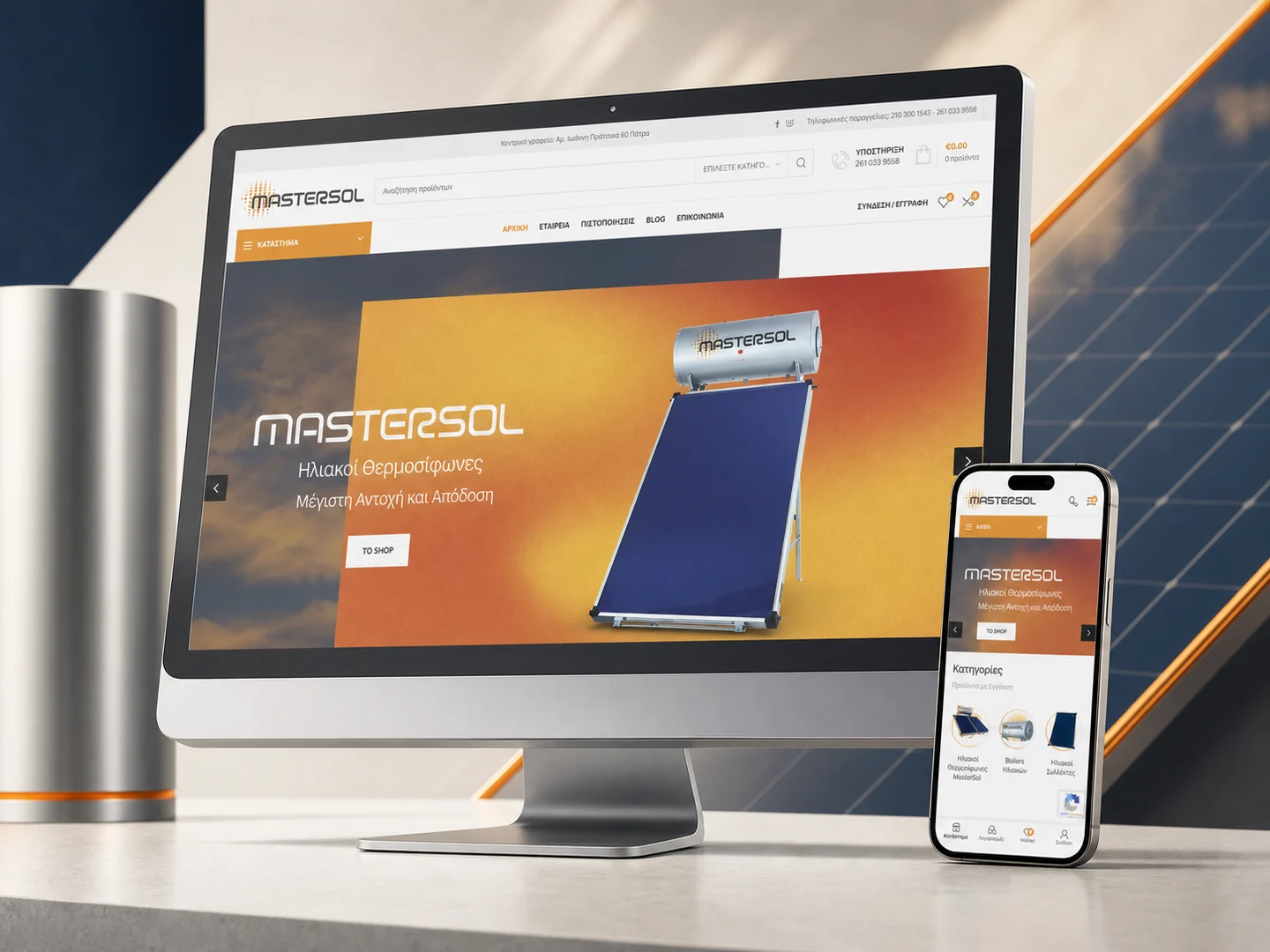
MasterSOL
Technical energy-product information and a clear B2C journey from evaluation to purchase.
View the case study ↗︎
Dive Athens
Layered taxonomy and technical attributes organise a deep specialist catalogue for confident selection.
View the case study ↗︎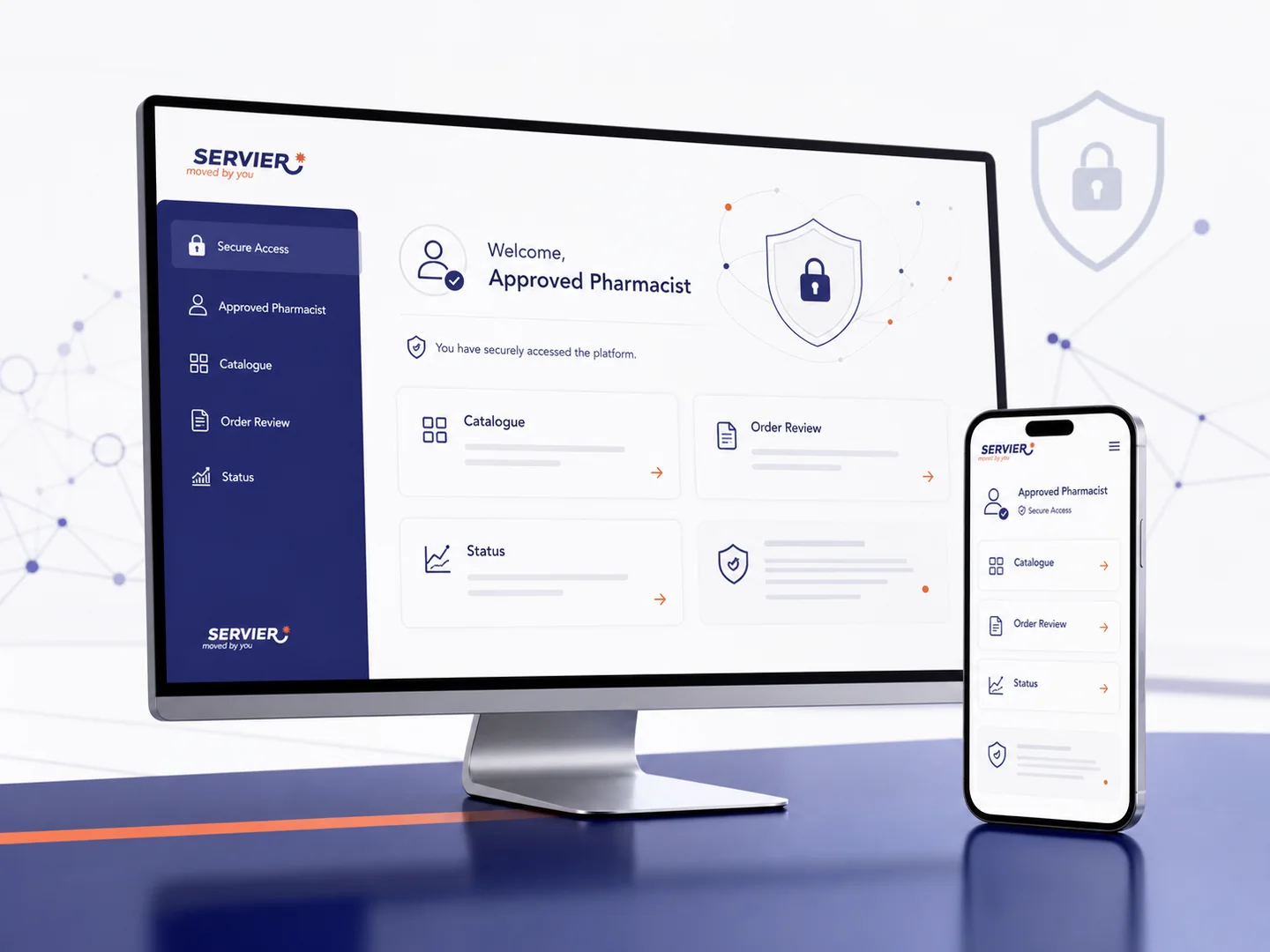
Servier B2B
Controlled access and digital ordering designed for approved professional pharmacists.
View the case study ↗︎Customer experience × operations
The store has to work on both sides of every order.
An easy buying experience depends on accurate product data, stock, payments and dependable internal processes. We design the customer-facing and operational systems together.
- 01
Customers find the right product
Search, categories and filters reduce uncertainty without creating information overload.
- 02
Product pages answer before purchase
Imagery, specifications, variants, availability and policies appear in a useful hierarchy.
- 03
Checkout remains clear
Cost, payment, delivery and the next action are explicit on mobile and desktop.
- 04
The team can operate each order
Stock, statuses, returns and exceptions follow a predictable flow instead of relying on manual fixes.
Platforms and commerce models
WooCommerce, OpenCart or custom — selected around the real operating model.
We are not a WordPress-only agency. We compare catalogue, content, B2C or B2B rules, integrations, team and existing investment before recommending technology.
Content-led B2C within WordPress
For brands that connect strong content, campaigns and a tailored buying experience.
- B2C retail
- Content & SEO
- Subscriptions
Focused commerce for catalogues and orders
For large catalogues, established commercial workflows, multiple markets or an existing OpenCart investment.
- Large catalogue
- Omnichannel
- International
When specialist rules are the product
For accounts, negotiated pricing, quotes, approvals, configurators, portals and complex integrations.
- B2B pricing
- Approvals
- Custom workflows
Connected commerce
An order does not end on the confirmation screen.
Product data, price, stock, payment, delivery and customer service must agree. We map ownership and edge cases before connecting the systems.
- One clear source of truth for each data type
- Synchronisation with monitoring and failure handling
- Realistic checkout, refund and fulfilment scenarios
- Documentation for the team operating the store
From discovery to launch
Before release, we test the complete journey of a real order.
The process keeps commercial strategy, content, UX, data and development moving in one direction through defined stages and approvals.
- 01
Discovery and commercial mapping
We map products, customers, channels, margins, teams, systems and the business rules that cannot be ignored.
- 02
Catalogue, content and UX
We define taxonomy, templates, search, product content, basket, checkout and the key buying journeys.
- 03
Architecture and integrations
We select the platform and design data flows across the store, ERP, CRM, payments, couriers and external channels.
- 04
Build, migration and realistic QA
We implement the design system, migrate controlled data and test payments, delivery, cancellations, refunds and edge cases.
- 05
Launch, observation and evolution
We verify business-critical flows after release and shape a backlog for performance, SEO, feeds and conversion.
One team / end-to-end commerce
Design, development, operations and growth within one plan.
The advantage is not a long service list. It is one shared technical and commercial view as the store moves from launch into real use.
Commerce SEO and GEO
A clear taxonomy, index rules, internal links, Product schema and answer-first content for people and search systems.
Performance and accessibility
Controlled assets, responsive imagery, keyboard use, contrast and reduced motion within the design system.
Analytics and CRO
Consent-aware events across search, product, basket and checkout, so improvement is based on real behaviour.
Feeds and commercial channels
Consistent product data for Google, Meta, marketplaces and partners, generated from a governed source.
Hosting, security and recoverability
Backups, monitoring, updates and a recovery approach for flows that directly affect orders.
Continuous technical ownership
Support, fixes and incremental development with one view of code, data and commercial operations.

Operator + developer perspective
We design the store from the customer, operator and developer perspectives.
The operating team needs clear data and predictable workflows. The technical team needs secure architecture, monitoring and room to evolve. Firstidea connects both perspectives from discovery through ongoing support.
- Operator view: catalogue, stock, statuses, returns and exceptions
- Developer view: APIs, ownership, logs, recoverability and maintenance
- Strategy, UX, content, development and growth in one workflow
- Real technical responsibility after launch
6 more selected eCommerce projects
Six more examples from a much larger eCommerce portfolio.
The selection spans WooCommerce, OpenCart, B2B, large catalogues and integrations. It represents only a small part of our eCommerce work.

Politis 1949
A heritage jeweller translated into a contemporary premium store with focused filters and a clear purchase journey.
View the case study ↗︎
Ariston Foods / Amphipolis
Partner access and wholesale pricing for Greek products in the UK market.
View the case study ↗︎
Nayia Cosmetics
Beauty storytelling and commerce on one WordPress foundation.
View the case study ↗︎
Carrel
Premium discovery across baby and children’s products, Baby Spa and useful content for parents.
View the case study ↗︎
Lefteris Bookstore
Thousands of titles connected to Vivlionet, Semantic and warehouse operations.
View the case study ↗︎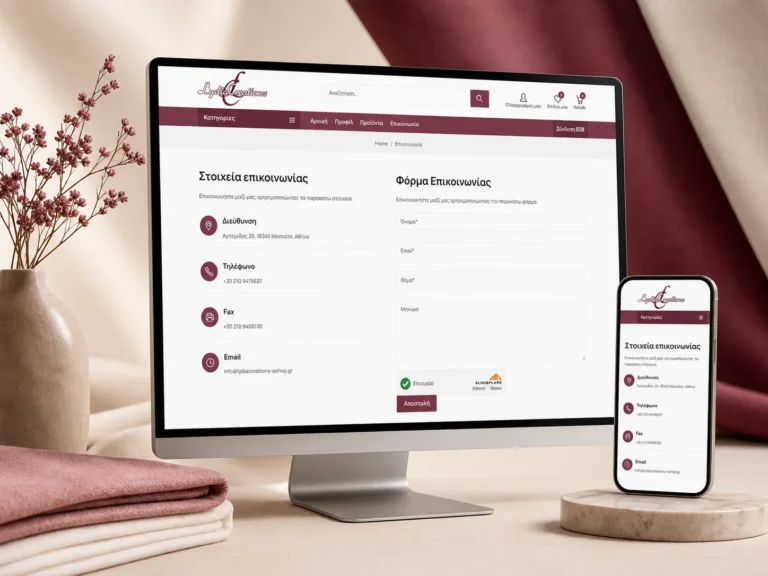
Lydia Creations
Bilingual fashion commerce for consumers and professional partners.
View the case study ↗︎eCommerce Insights before the decision
Useful answers about the model, platform and conversion.
These guides separate the variables that matter from easy promises and help define the real project scope.
Skroutz or an independent eShop?
How ownership, contribution, data, operations and a hybrid channel model should be compared.
Read the guide ↗︎Platform selectionWooCommerce or OpenCart?
A practical decision guide covering catalogue, content, integrations, team and total cost of ownership.
Read the guide ↗︎Conversion and operationsHow can an eShop increase its orders?
A diagnosis of the journey from acquisition to checkout, repeat purchase and customer service.
Read the guide ↗︎Cost and scopeHow much does an eCommerce website cost?
What shapes a proposal and how to compare scope, recurring costs and responsibilities.
Read the guide ↗︎FAQ
What we need to clarify before eCommerce development begins.
Clear answers at the start protect budget, schedule, SEO and day-to-day operations.
What does professional eCommerce development include?
Scope can cover commerce strategy, catalogue architecture, product content, custom UX/UI, WooCommerce, OpenCart or custom development, payments, couriers, integrations, SEO, GEO, performance, analytics, migration, QA, training and support. Exact deliverables and responsibilities are agreed in writing before the project begins.
How much does an eShop cost to build?
Cost depends on the size and condition of the catalogue, the required templates, languages, integrations, migration and level of custom design. After discovery we provide a defined scope, phases and deliverables rather than a generic page package.
How long does an eCommerce project take?
The schedule is defined once catalogue readiness, approvals, data sources, integrations and migration are understood. Complex B2B or omnichannel work is often delivered in controlled phases so that QA remains meaningful.
WooCommerce, OpenCart or a custom solution?
WooCommerce often suits content-led brands and teams that need WordPress. OpenCart is a focused commerce option for catalogues and established order operations. Custom architecture is appropriate when pricing, permissions, approvals or integrations form the core of the system. The decision follows discovery.
Can an existing store be migrated without losing SEO visibility?
Yes, through a controlled migration. We map URLs, categories, products, metadata, structured data and important backlinks, preserve useful paths and add redirects only where required. Rankings cannot be guaranteed mechanically, but the technical risks can be reduced substantially.
Can you integrate ERP, inventory, CRM, couriers and marketplaces?
Yes, after reviewing APIs or feeds, data ownership, synchronisation frequency, order statuses and edge cases. Each integration is designed as an operational flow with monitoring and failure handling, not treated as a simple plugin installation.
Who uploads the products, photography and descriptions?
The proposal defines what can be migrated automatically, what needs cleaning and what each team supplies. We can organise taxonomy, content templates, copy direction, photography and the import process so product content remains consistent.
Are SEO, analytics and promotion included?
The build includes the agreed technical and information foundation: URLs, templates, structured data, performance and measurement setup. Ongoing content, SEO, CRO and campaigns can continue as a separate, measurable scope.
Do you provide support and development after launch?
Yes. We can take responsibility for monitoring, updates, backups, fixes, performance, feeds and planned evolution. The support model is defined according to the store’s business criticality and the responsibilities of the internal team.
Find the right specialist service
Platforms, commercial models and services around the eShop.
This hub explains the complete method. The routes below focus on the areas where technology, operations or the engagement model genuinely change.
Platform and architecture
- WooCommerce developmentContent-led commerce with WordPress, custom UX and a controlled plugin stack.↗︎
- OpenCart developmentFocused commerce for catalogues, orders, modules and integrations.↗︎
- ERP and XML integrationsControlled product, price, inventory and order data flows.↗︎
- Multilingual websites and eCommerceA complete experience in every language, with correct URLs, hreflang and market rules.↗︎
- B2B eCommerceAccounts, negotiated pricing, quotes, approvals and professional ordering flows.↗︎
- Dropshipping eCommerceSupplier feeds, pricing rules, stock synchronisation and order routing.↗︎
- Custom commercePortals, configurators and specialist logic when an off-the-shelf CMS is not enough.↗︎
Engagement model and location
Takeover, growth and technical care
- WordPress and WooCommerce supportAudit, stabilisation, repairs and continuous development.↗︎
- OpenCart supportTaking over an existing store, including checkout, modules and integrations.↗︎
- SEO and performanceOrganic architecture, speed, content and conversion improvement.↗︎
- Digital marketingPaid media, social, email and content built on dependable commerce data.↗︎
- Hosting and securityInfrastructure, monitoring, backups and proactive technical care.↗︎
- Platform takeover and managementTechnical assessment and organised care for existing systems.↗︎
Acquisition and retention
- Google Ads for eCommerceSearch, Shopping and campaigns supported by sound measurement and product data.↗︎
- Social media marketingContent, paid social and remarketing shaped around the commerce journey.↗︎
- Video marketingVideo production and distribution for product, brand and campaigns.↗︎
- Email marketingConsent-aware lifecycle communication, automations and repeat purchases.↗︎
- Article marketingGuides, category content and editorial journeys towards relevant products.↗︎
- Affiliate marketingPartners, attribution and commission rules with controlled operations.↗︎
- eShop advertising guideBudget, unit economics, tracking and the conditions for genuine profitability.↗︎
The next store needs a clear scope
Let us design an eShop that can sell, operate and evolve.
Tell us what you sell, how the business works today and which systems need to cooperate. We will recommend the architecture, deliverables and next steps without vague promises.