
Editorial platforms / Content systems
Blog and portal development that organises knowledge and everyday publishing.
We design content platforms for businesses, editorial teams and organisations, with a clear reading experience, real editorial workflows, SEO/GEO and a technical foundation built to grow.
More than an article feed
A good portal helps readers find the right content and the team produce it correctly.
Homepage design is not enough when the archive grows. Content types, taxonomies, search, authors, related content and archives need to work as one discovery system.
At the same time, the team needs safe roles, reusable patterns, approvals and a measurable process. We design both sides together.
Content platform models
The right platform starts with the role content needs to play.
We do not call every article feed a portal. We define the audience, production, discovery, revenue and technical complexity before deciding scope.
Corporate blog & knowledge hub
Articles, guides, research and FAQs that build topical authority and support the organisation’s services.
News & specialist portal
Continuous publishing, categories, authors, breaking or featured topics and controlled advertising positions.
Digital magazine
Curated editions, features, multimedia stories and a strong visual identity without sacrificing readability.
Membership & subscription content
Free and protected material, accounts, access levels, payments and explicit entitlement rules.
Organisation or community portal
Announcements, people, initiatives, documents, events and content from multiple teams in one governed structure.
Custom content platform
When data, roles, search or production workflows extend beyond the model of a general-purpose CMS.
Information architecture
Information needs relationships—not only a publication date.
The content model defines what each object is, how it connects and which pages deserve to exist, be crawled and rank.
Content types before templates
Article, news item, guide, interview, person, topic, video or report receives a clear model and an owner.
Taxonomy with a real purpose
Categories, topics, tags and content series support discovery without producing large numbers of low-value pages.
Search & related content
Search, filters, recommendations and contextual internal links help readers continue with purpose.
Author & editorial entities
Authors, reviewers, organisations and sources are presented with consistent attribution and clear editorial responsibility.
Archives with crawl discipline
Date, topic and author archives are published only where useful, with explicit indexation and pagination rules.
Conversion without interruption
Newsletter, membership, lead capture, advertising or commerce is placed without undermining the reading experience.
Editorial workflow
Publishing quickly does not require giving up control.
We define a workflow safe enough for the brand and simple enough for daily use. Every stage has an owner and a clear output.
- 01
Idea & assignment
Brief, purpose, search intent, sources and an accountable content owner.
- 02
Writing & media
Drafting inside safe patterns with images, video, captions and documented usage rights.
- 03
Editorial review
Accuracy, brand, SEO/GEO, links, accessibility and relevant legal checks.
- 04
Approval & scheduling
A named publisher, date, category, metadata and distribution channels.
- 05
Publication & distribution
Sitemap, newsletter, social, feeds and integrations are updated in a controlled way.
- 06
Measurement & renewal
Queries, engagement, conversions and a review date determine the next action.
SEO/GEO by architecture
Topical authority does not come from a large number of disconnected articles.
Every publication needs a specific search intent, a real author or reviewer, sources where required, visible dates and a place within a useful topical cluster.
- Article, BlogPosting, Person and Organization schema
- Answer-first structure for search and answer engines
- Internal links to topics, services and relevant entities
- Canonical, pagination and crawl rules for archives
- Sitemaps, feeds and indexation controls
- Content refresh with an owner and review date
Technology follows publishing
The platform is selected after mapping the real editorial operation.
We are not a WordPress-only agency. We assess the archive, team, search, permissions, integrations and the cost of future change.
WordPress / Gutenberg
A strong fit for organised editorial production, a custom block theme, reusable patterns and ownership without page-builder lock-in.
Joomla / existing portals
Takeover, redesign or migration of mature portals where the current investment and archive need technical assessment first.
Custom development
For specialist permissions, search, datasets, workflows, paywalls or integrations that should not be forced into a generic CMS.
Multilingual publishing
A complete path for each language with correct URLs, hreflang, translated taxonomies, metadata and editorial ownership.
Performance & accessibility
Responsive media, performance budgets, semantic HTML, keyboard support and comfortable reading on every viewport.
Support & governance
Roles, updates, backups, monitoring, publishing rules and clear technical ownership after launch.
Content migration without organic loss
A valuable archive is not migrated by copying and pasting.
We inventory URLs, articles, authors, taxonomies, media, metadata, schema, backlinks and internal links. We preserve what has value and use a 301 only where a genuinely equivalent destination exists.
Explore SEO, Performance & Digital Growth ↗︎- 01
Inventory
Counts, URLs, content types, media, metadata and ownership.
- 02
Mapping
New structure, taxonomies, templates and a rule for every legacy URL.
- 03
Migration QA
Automated validation, crawling, redirects, schema and visual samples.
- 04
Post-launch evidence
Indexation, queries, errors, engagement and conversion monitoring.
Selected editorial work
Real projects with different content and editorial requirements.
Each card opens the complete case study with its business context, architecture and project decisions.
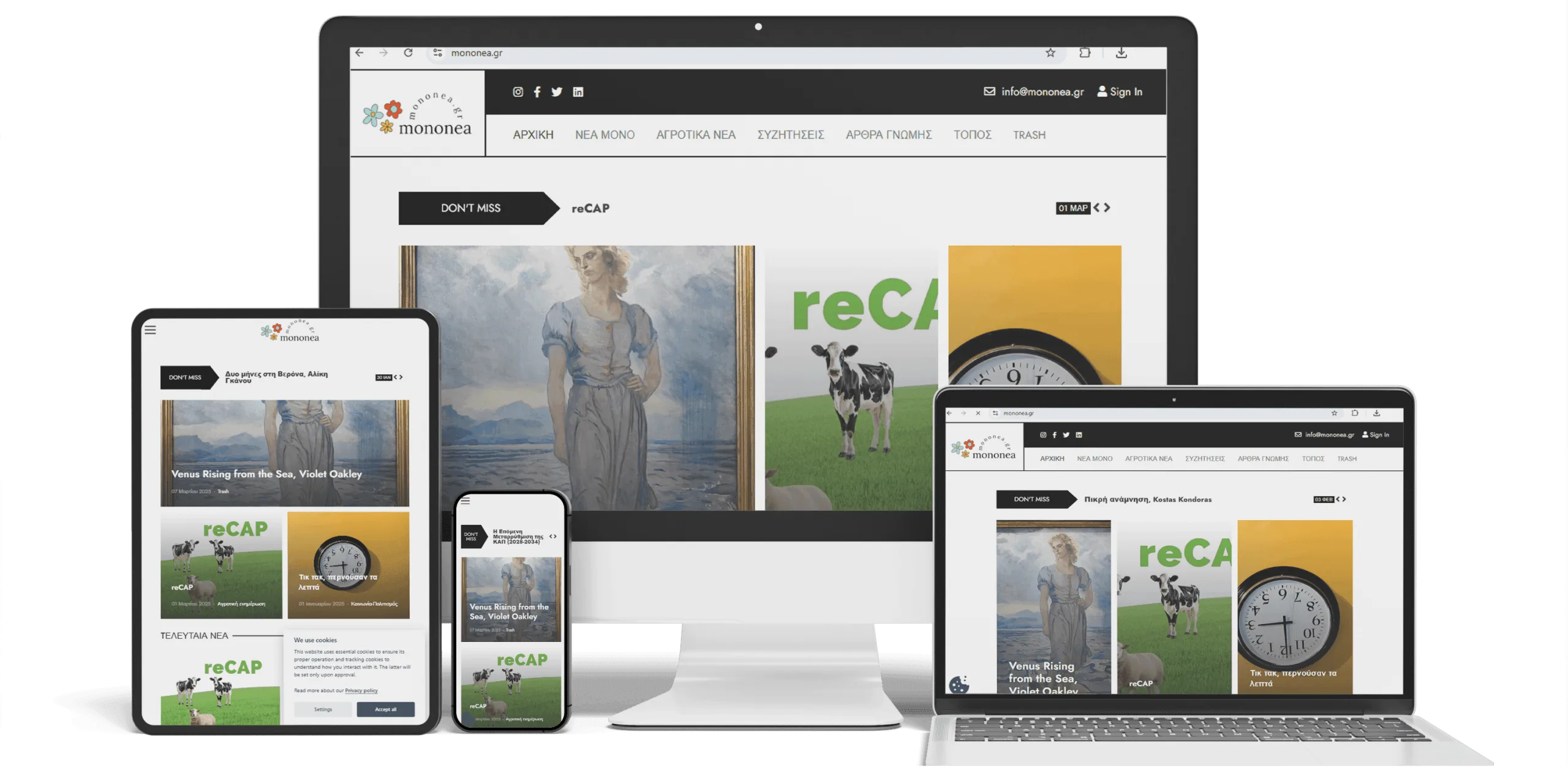
MonoNea
A substantial editorial archive, topic architecture and dependable daily publishing workflows.
View the case study ↗︎
Key Learning
Bilingual services, educational content and organised discovery for university students.
View the case study ↗︎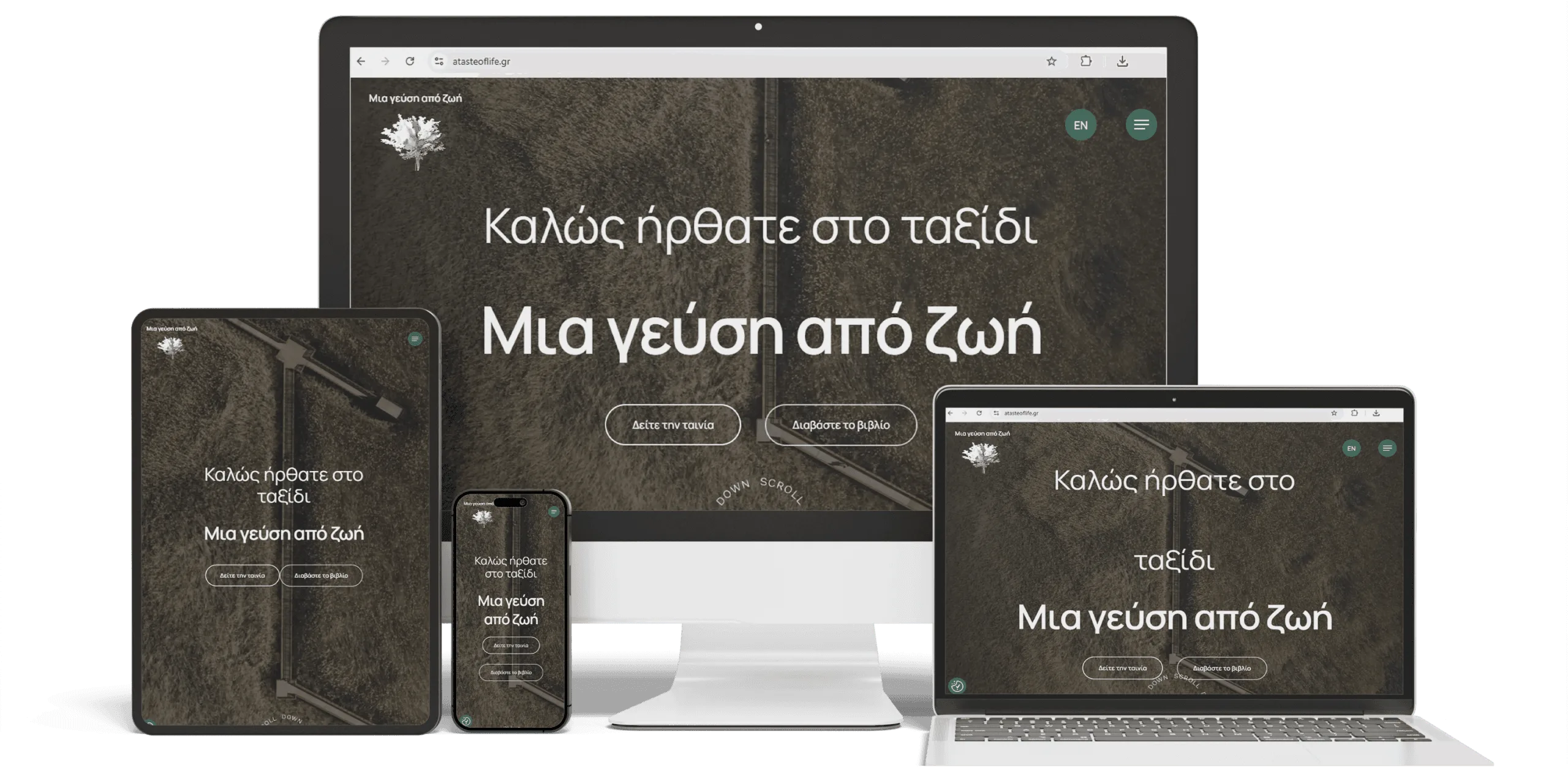
A Taste of Life
Films and an interactive digital publication inside one bilingual, story-led experience.
View the case study ↗︎From editorial strategy to operation
Six stages to a portal that can operate in the real world.
The project is not complete when the homepage is approved. Content, migration, authoring and daily management belong to the same scope.
- 01
Editorial & business discovery
We document audiences, goals, the existing archive, revenue model, roles, publishing frequency and technical constraints.
- 02
Content model & information architecture
We define content types, taxonomies, URLs, search, archives, internal links and the key editorial journeys.
- 03
UX, design system & prototype
Reading, discovery, authoring and conversion are designed together, testing critical templates with real content.
- 04
Development & integrations
We implement the CMS or custom platform, permissions, search, newsletter, analytics, advertising, membership and agreed connections.
- 05
Migration & acceptance QA
Articles, media and authors are migrated with mapping, redirects, validation and schema, accessibility, speed and search tests.
- 06
Launch, training & evolution
We train the team, monitor indexation and real use and improve the system through evidence-led decisions.
Begin with the publishing reality
Let us map what you publish, who approves it and how the audience needs to find it.
Send us the current website or archive, the core content types, the number of authors and the functions the new platform needs to support.
Request an initial assessment ↗︎FAQ
What needs to be clear before a blog or portal project begins.
The answers define the right scope, editorial model, migration strategy and technical responsibility after launch.
What is the difference between a blog and a portal?
A blog is usually organised around a relatively simple article feed. A portal can include multiple content types, authors, taxonomies, roles, filters, advertising, subscriptions or integrations. The correct solution depends on operations, not the label.
Can you develop a news portal?
Yes. We design topic and news architecture, homepage modules, authors, featured content, search, archives, advertising positions and the daily workflow for writing, approval and publication.
WordPress, Joomla or a custom platform?
WordPress with a custom Gutenberg theme covers many editorial needs very well. Joomla can be worth retaining in a mature installation. Custom development is appropriate when specialist data, permissions, search or workflows are core to the product.
How should categories and tags be organised for SEO?
Each taxonomy needs a clear role, distinct intent and enough relevant content. We avoid uncontrolled tags and thin archives, define canonical and indexation rules and connect topics to the appropriate services or entities.
What does SEO and GEO for a portal include?
It includes the content model, URLs, internal linking, crawl control, sitemaps, author and organisation entities, Article or BlogPosting schema, visible dates, sources, answer-first writing and a consistent connection between each article and its wider topical cluster.
Can the platform support multiple authors and approval levels?
Yes. We define author, editor, reviewer and publisher roles, safe permissions, statuses and review checkpoints so the team can produce content without unnecessary access to structure or code.
Do you support newsletters, comments and social media?
Yes, where they support the strategy. We can connect a newsletter platform, consent, social distribution, moderation and anti-spam controls with clear data ownership and without overlapping, heavy plugins.
Can the portal include subscriptions or a paywall?
Yes. We design accounts, access levels, payments, renewal, entitlement and customer support. The commercial and legal model should be defined before the technology is selected.
Can advertising be included?
Yes. We plan controlled positions, responsive sizes, consent and performance constraints. Advertising should not create layout shifts, cover content or undermine readability.
How is an existing article archive migrated?
We inventory and map URLs, content types, authors, taxonomies, media, metadata and internal links. Every changed URL needs a genuinely equivalent redirect, and migration is checked through counts, crawls and content samples.
How can a large portal remain fast?
Through a sound data model, controlled queries, responsive images, caching, CDN where appropriate, performance budgets and measurement of real templates. Speed is treated as an architectural requirement rather than a plugin added at the end.
Do you provide support after launch?
Yes. We provide updates, backups, security, monitoring, performance work, incremental development, editorial support and SEO/GEO improvements with clear technical ownership and an agreed scope.