
Dropshipping commerce / operations first
Dropshipping eShop development that controls data, margin and orders.
We connect suppliers, catalogue and order fulfilment into one controlled operation — using WooCommerce, OpenCart or custom integrations according to the real business model.
From feed to daily operation
Automation is useful only when exceptions remain visible.
Dropshipping is not simply a product import. It is a data, pricing, logistics and customer-care system that must keep working when something changes or fails.
- 01
The catalogue follows verified supplier data
Products, prices, stock and attributes update through defined rules, quality checks and an explicit source of truth.
- 02
Margin is not left to chance
Markup, shipping, fees, taxes and likely returns are assessed before a product is treated as commercially viable.
- 03
Every order reaches the right supplier
The system knows who fulfils an order, which data they need and how tracking or an exception comes back.
- 04
Customers receive realistic information
Availability, delivery time, shipping cost and returns are communicated without promises the store cannot control.
Connected dropshipping operations
What needs to work together behind the storefront.
The scope follows suppliers, commercial rules and customer commitments — not a generic list of plugins.
Supplier onboarding & feeds
API, XML or CSV review, field mapping, update frequency, credentials and rules for complete or incremental imports.
Product data & catalogue quality
Categories, attributes, variants, images, titles and descriptions are normalised before publication.
Stock, pricing & margin rules
Safety stock, markup by category or supplier, minimum margin, rounding and fallbacks when a value is missing.
Orders & supplier routing
Multi-supplier order splitting, dispatch, status updates, tracking and explicit handling when an order cannot be sent.
Shipping, returns & customer care
Delivery times, zones, charges, cancellations, RMA and customer updates are designed as one connected operation.
Channels, monitoring & analytics
Google Merchant, marketplaces, alerts, logs and commercial measurement share the same reliable product and order model.
Feasibility before build
Before we build the eShop, the model needs to prove it can work.
Selling price is not profit. We map costs and operational risks before investing in catalogue and automation.
Reliable supplier
Feed quality, dispatch times, tracking, returns and support are genuinely available.
Viable margin
The contribution survives fees, shipping, marketing, cancellations and returns.
Meaningful differentiation
Brand, selection, content or service gives customers a reason to choose more than the lowest price.
Operational ownership
Someone is responsible for exceptions, customer communication and failed workflows.
Platform fit
We select the platform after reviewing feeds and operating rules.
There is no single “dropshipping platform” for every business. Technology needs to support the real volume, integrations and team.
Content-led dropshipping with marketing flexibility
A strong fit when brand, editorial content and landing pages matter, supported by a controlled plugin and integration stack.
WooCommerce eShop development ↗︎Focused catalogue and order operations
A capable commerce foundation for larger catalogues, supplier imports and specialised order logic when architecture remains disciplined.
OpenCart eShop development ↗︎When rules and data sources define the product
Middleware, queues and focused dashboards when multiple suppliers, high volume or complex exceptions exceed a simple extension.
Custom web systems ↗︎Monitoring & exceptions
A failed sync should not become an incorrect sale.
We record what failed, which products or orders are affected and who needs to act. Automation needs visibility and safe fallbacks.
- Logs and alerts for feeds, imports and routing
- Retry rules without duplicate products or orders
- An exception queue with ownership and priority
- An audit trail for price, stock and status changes
SEO, product content & GEO
The same supplier description across hundreds of stores is not an organic advantage.
We build stable category architecture, useful content and deliberate index rules so the store develops its own value instead of depending on thin or temporary product pages.
Explore SEO & organic growth ↗︎Catalogue governance
Rules for titles, attributes, images, duplicate SKUs and products with incomplete data.
Stable search architecture
Categories, guides and landing pages that remain useful when supplier catalogues change.
Index control & structured data
Facets, availability, canonicals and Product data follow the store’s real state.
Connected-commerce proof
Real work with feeds, supplier data and complex commerce.
We do not present these projects as ready-made dropshipping packages. They demonstrate our experience in product data, integrations, catalogues and daily commercial workflows.
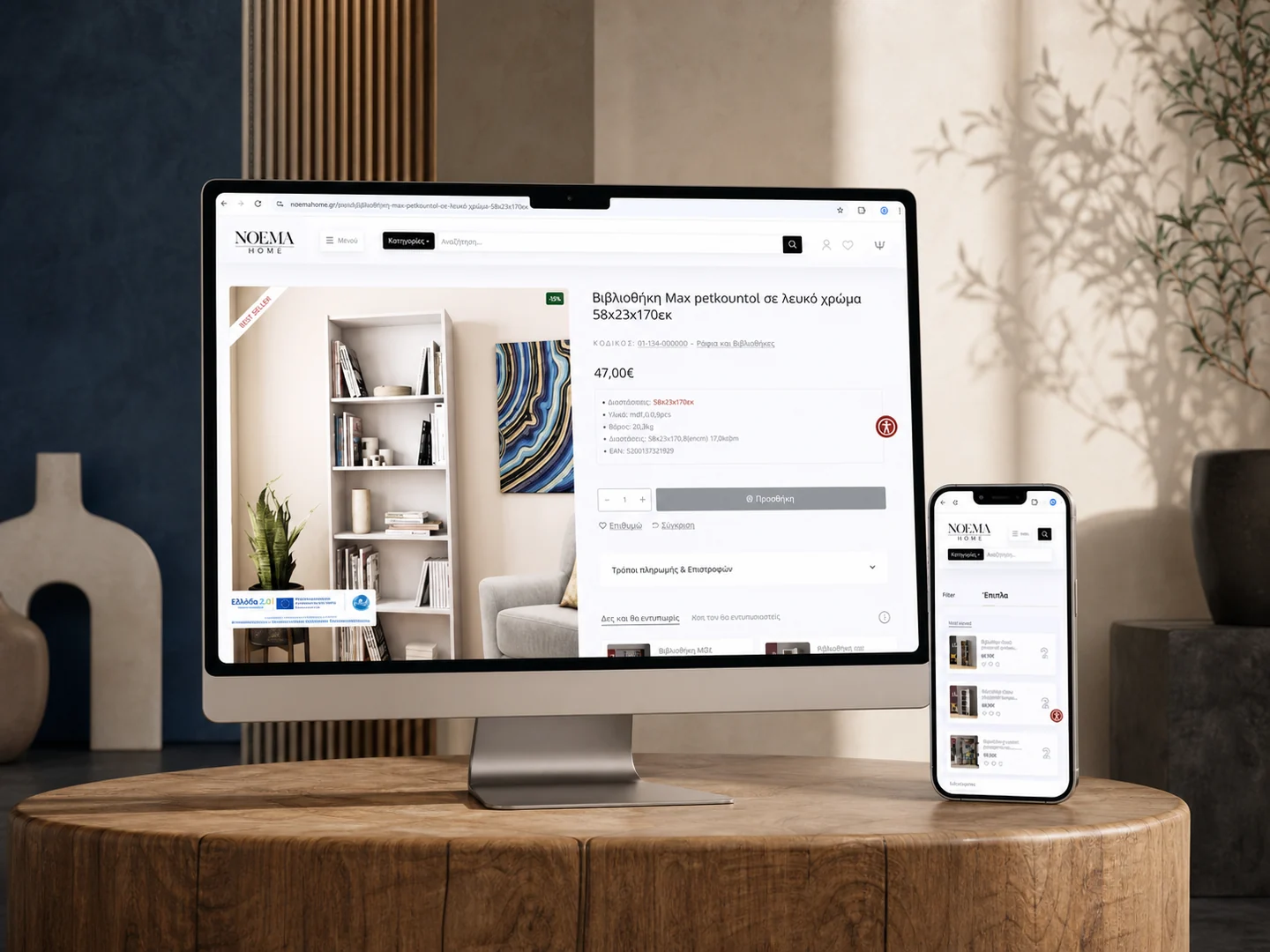
Noema Home
A large bilingual catalogue with automated product data supplied through XML integrations.
View the case study ↗︎
Electrokinisi Aigiou
A technical catalogue with structured supplier imports and systematic data updates.
View the case study ↗︎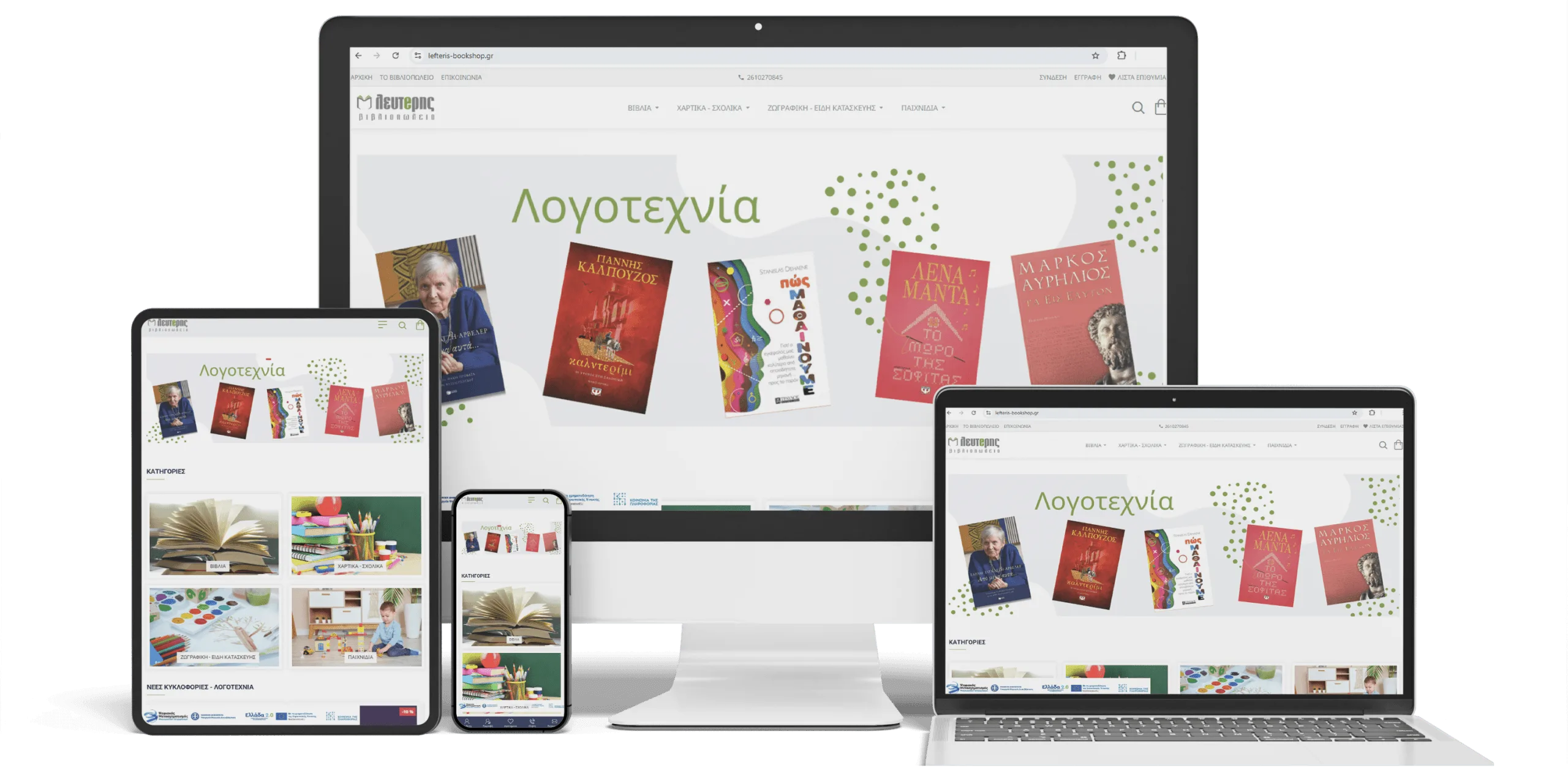
Lefteris Bookstore
Thousands of titles, prices, stock records and documents connected to external sources and a commercial system.
View the case study ↗︎From feasibility to stable operation
Six stages before automation is trusted with real orders.
The project advances with real supplier samples, commercial rules and test orders — not just polished screens.
- 01
Feasibility & commercial model
We assess the market, products, suppliers, margins, delivery times, returns and the store’s genuine point of difference.
- 02
Supplier & feed audit
We test real API, XML or CSV samples and document data quality, limits, update frequency and exceptions.
- 03
Catalogue & rules blueprint
We define taxonomy, fields, content rules, markup, stock buffers, routing and which system owns each data point.
- 04
UX, platform & build
We design the store and select WooCommerce, OpenCart or a custom integration according to the operational scope.
- 05
Integrations & real-order QA
We test imports, price changes, out-of-stock cases, split orders, payments, dispatch, tracking, cancellations and returns.
- 06
Launch, monitoring & improvement
We launch in a controlled way, monitor feeds, orders, margin and customer signals, then improve with real evidence.
Start with evidence
Send us a real supplier feed before we choose a platform.
With an API, XML or CSV sample, pricing policy, dispatch times and returns process, we can assess the scope and principal risks.
Discuss your dropshipping project ↗︎FAQ
What should you know before starting a dropshipping eShop?
The right answers protect margin, customer experience and the investment in the platform.
What is a dropshipping eShop?
It is an online store that sells products without necessarily holding its own physical stock. The supplier fulfils shipment, while the store remains responsible for presentation, sale, customer communication and correct order management.
Is dropshipping an easy way to start without capital?
No. It reduces the need to purchase inventory, but it still requires investment in the platform, content, marketing, support and returns. It also needs adequate margin, reliable suppliers and a clear reason to choose the store over competitors selling the same products.
WooCommerce or OpenCart for dropshipping?
Both platforms can support dropshipping. WooCommerce is strong when content and marketing play a central role. OpenCart is a focused commerce foundation for catalogues and operational flows. The right choice depends on feeds, extensions, catalogue volume and operating requirements.
Can the store connect to multiple suppliers?
Yes, provided each supplier offers a reliable API, XML, CSV or another documented source. Rules are needed for duplicate products, supplier priority, stock buffers, shipping and what happens when a source is delayed or fails.
How are prices and stock updated automatically?
The system reads available sources at an agreed frequency, validates the data and applies pricing and availability rules. Changes need to be logged and failures should create an alert rather than silently corrupting the catalogue.
What happens when a supplier feed stops working?
We define a safe fallback in advance: keep the last valid price for a limited period, hide affected products, set availability to zero or require human review. The right response depends on the risk of selling with incorrect information.
How is profit margin protected?
We account for product cost, shipping, payment and marketplace fees, taxes, likely returns and advertising cost. Minimum-margin rules can block or flag products that stop being viable after a supplier cost change.
Who manages returns and warranties?
The store remains responsible to the customer. The supplier workflow needs to define who approves the case, where the product is returned, who updates the customer and how refund, replacement and warranty statuses connect.
Can a dropshipping eShop rank organically?
Yes, but not by mass-publishing the same supplier descriptions. It needs useful taxonomy, original category and editorial content, strong product pages, controlled faceted URLs, accurate structured data and a policy for products that appear or disappear frequently.
Can it connect to Google Merchant and marketplaces?
Yes, when product data, availability, delivery times and store policies can meet each channel’s requirements. Outbound feeds should be generated from a validated source and monitored for rejections or mismatches.
How much does dropshipping eShop development cost?
Cost depends mainly on the number and quality of supplier feeds, catalogue complexity, pricing rules, order routing, marketplaces and returns requirements. A feed and feasibility audit gives us the evidence required for a realistic scope.
Can you convert an existing eShop to dropshipping or a hybrid model?
Yes. We map existing products, URLs, stock ownership, suppliers and order flows, then introduce the new model without assuming the whole catalogue must change. A hybrid model is often the safer commercial choice.