
Managed hosting / technical operations
Website hosting with a technical team that understands the application.
Managed hosting for WordPress, WooCommerce, OpenCart, Joomla and custom systems, combining monitoring, backups, security layers, performance and clear technical ownership.
More than server space
We do not simply sell space on a server.
A dependable, fast website relies on more than CPU and RAM. Domain, DNS, SSL, runtime, database, cache, application code, integrations and day-to-day changes all have to work together.
We therefore begin with the system and its business value. Only then do we recommend a migration, improvement of the current infrastructure or a different level of management.
Responsibility model
Reliability starts when ownership is clear.
Responsibility does not stop at the control panel. We record every layer, credentials, owners, dependencies and the escalation path for an incident.
- 01
DOMAIN / DNS
Domain ownership, nameservers, records and protected access.
- 02
SERVER / RUNTIME
Compute resources, PHP, database, SSL and foundational services.
- 03
APPLICATION
WordPress, WooCommerce, OpenCart, Joomla or custom code and integrations.
- 04
OPERATIONS
Monitoring, backups, restore, incidents, changes and technical communication.
Managed hosting scope
Infrastructure, application and operations are treated as one system.
The final scope reflects the platform, traffic, integrations and how critical the service is to the organisation.
Inventory & transition
We map domain, DNS, email, application, integrations and real dependencies before planning a migration or takeover.
Runtime & infrastructure
PHP, database, web-server versions and resources are selected around the platform and its actual workload.
Monitoring
Availability and agreed technical signals are observed so that an issue becomes visible and actionable.
Backups & restore
Frequency, retention, off-site copies and the restore process are defined according to business criticality.
Security layers
Updates, access control, hardening and event review work as successive layers of risk reduction.
Performance stack
Cache, CDN, images, database and application code are tuned as one system rather than a collection of plugins.
Backup ≠ recovery plan
A backup becomes valuable when the restore path is known.
Frequency, retention and backup location are defined alongside acceptable data loss and the desired recovery time. Critical systems may require integrity checks or restore testing.
- A documented backup policy
- A copy outside the same failure domain where required
- Protected credentials and access
- A restore order for application, database and integrations
- Verification before an incident is considered closed
Platform-aware operations
The right hosting setup follows the way the platform works.
A content website, checkout, large catalogue and integrated application create very different workloads.
WordPress & WooCommerce
Hosting that accounts for dynamic pages, checkout, scheduled actions, plugins and editorial workflows.
Related technical service ↗︎02OpenCart
Configuration for catalogues, filters, sessions, extensions, cron tasks, feeds and commerce integrations.
Related technical service ↗︎03Joomla
Compatible runtime, controlled upgrades and ongoing technical care for existing Joomla websites.
Related technical service ↗︎04Custom applications
Infrastructure and deployments designed around the framework, data flows and real product operations.
Related technical service ↗︎Stay or migrate?
We do not recommend a move when the current infrastructure does its job well.
We can manage the application on the current provider, work with an infrastructure team or plan a migration when performance, security, access or support limitations provide a measured reason.
Service level by business impact
Technical coverage scales with criticality.
We do not publish generic packages that conceal different needs. After the inventory, we define scope, channels, priorities and deliverables.
Content & presence
For websites with controlled changes and normal-priority recovery requirements.
Leads & commerce
For websites and stores that affect daily enquiries, orders, integrations and revenue.
Operational system
For systems where downtime or data loss require stricter architecture, monitoring and recovery planning.
Different operational profiles
Platforms with different catalogues, content and technical workloads.
These projects show why hosting decisions should follow the actual application. They do not by themselves represent an active hosting agreement.

Noema Home
A bilingual catalogue with filters, commerce flows and different caching requirements.
View the case study ↗︎
Bastard Vinyl
A large music catalogue with search and release journeys supporting continuous commerce.
View the case study ↗︎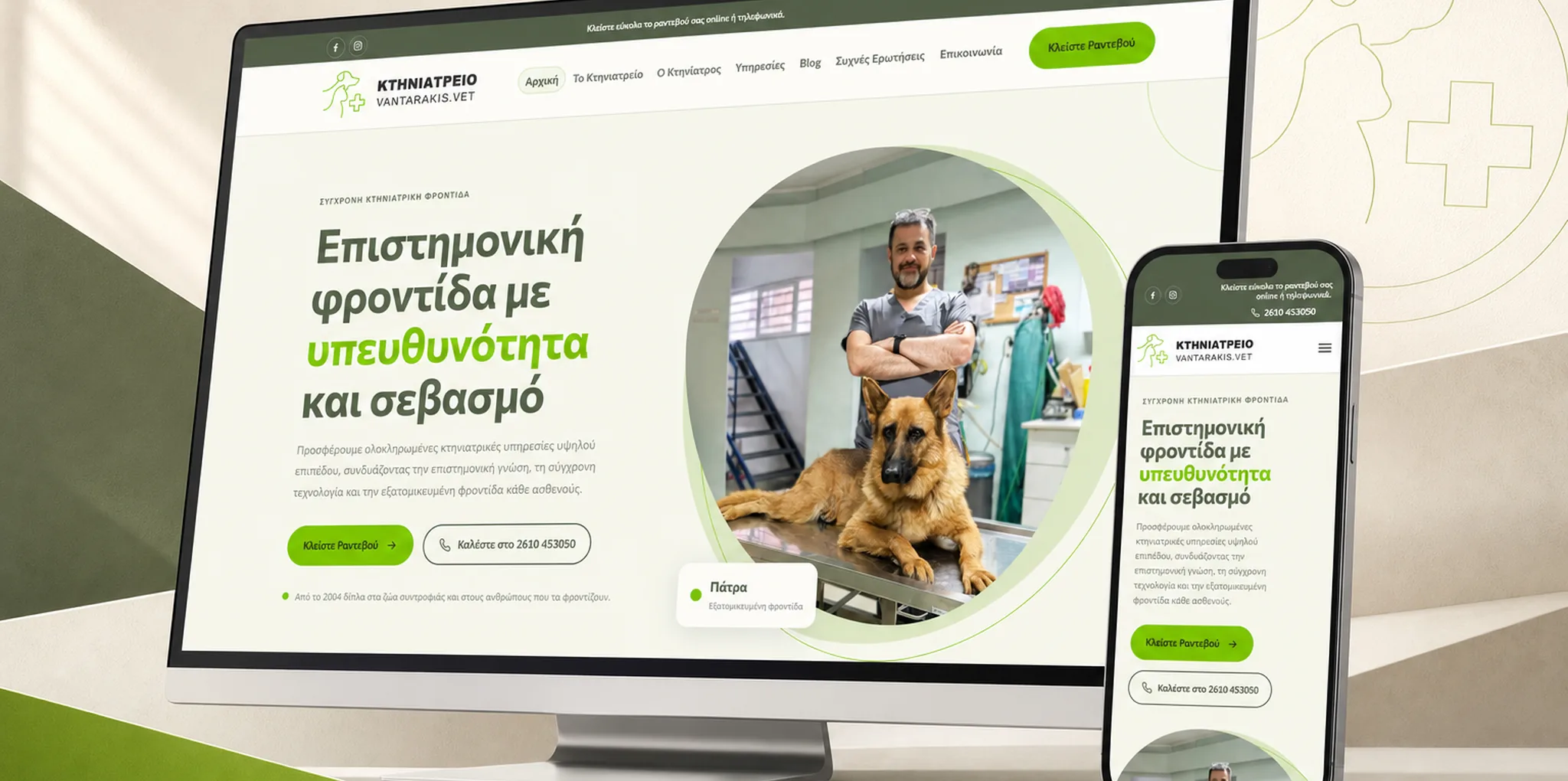
Vantarakis Vet
A content-led WordPress presence with scientific information and clear contact journeys.
View the case study ↗︎Audit before migration
Five stages from inventory to stable operations.
Migration is only one step. Reliable operations depend on accurate discovery, verification and consistent day-to-day processes.
- 01
Audit
We map infrastructure, traffic, application, data, email, DNS and integrations.
- 02
Service design
We define responsibility, environment, backup policy, monitoring and change procedures.
- 03
Migration or takeover
We migrate in a controlled way or organise the current setup without forcing a rebuild.
- 04
Verification
Routes, SSL, forms, checkout, jobs, integrations, cache and restore readiness are tested.
- 05
Operate & improve
The system is monitored, maintained and improved according to agreed priorities.
Start with the current system
Before changing servers, let’s understand what must be protected.
Send us the URL, platform, current provider and primary issue. We will begin with an inventory and technical priorities.
Request an initial assessment ↗︎FAQ
Frequently asked questions about managed website hosting.
These answers clarify the difference between server resources and responsible technical operations for an application.
What is managed hosting?
It combines hosting with technical management of the environment and the application. The agreed scope can include monitoring, backups, updates, security hardening, performance and incident support.
How is it different from shared hosting?
Shared hosting mainly provides resources and a control panel. Managed hosting also defines technical responsibility, processes, checks and platform-aware support.
Must the website move to your server?
Not necessarily. If the current provider meets the technical and operational requirements, we can organise management there. We recommend migration only when there is a clear reason.
Do you support WordPress and WooCommerce hosting?
Yes. We review plugins, scheduled actions, checkout, database, cache and integrations because a WooCommerce store has different requirements from a simple WordPress brochure site.
Do you host OpenCart and Joomla websites?
Yes. OpenCart and Joomla environments are managed around their versions, extensions, cron jobs, catalogues and integrations.
Can a website be migrated without downtime?
We use staging, verification, data synchronisation and a controlled DNS change to limit disruption. The actual risk and maintenance window are agreed after the audit.
How frequently are backups taken?
Frequency and retention should not be identical for every project. They depend on how much data changes, acceptable data loss and how quickly the service should be recoverable.
Do you test whether a backup can be restored?
A backup file alone is not enough. Where the service scope requires it, we include integrity checks or restore testing at a frequency that reflects the system’s criticality.
Do you provide an uptime guarantee?
Availability commitments depend on the infrastructure provider, architecture and agreed service level. We do not publish a generic percentage before those parameters are defined.
Can you guarantee that a website will never be breached?
No responsible technical team can promise zero risk. We can reduce exposure through multiple protection layers and define clear detection, response and recovery procedures.
Are domain, DNS and business email included?
They are mapped within the overall architecture, while ownership and scope are explicitly recorded. Business email is often better placed on a specialised service rather than the website server.
Where is data stored and how is GDPR addressed?
We document providers, processing locations and available contractual settings. Infrastructure is selected against the organisation’s real data and compliance requirements.
Do you provide website hosting across Greece?
Yes. Firstidea operates from Patras and supports organisations throughout Greece. Infrastructure and technical operations are managed remotely through agreed procedures.
How much does managed hosting cost?
Cost depends on traffic, platform, resources, backup and monitoring policy, integrations, support coverage and the required service level. We define a clear scope after the audit.