
OpenCart · Meta Commerce · Measurement
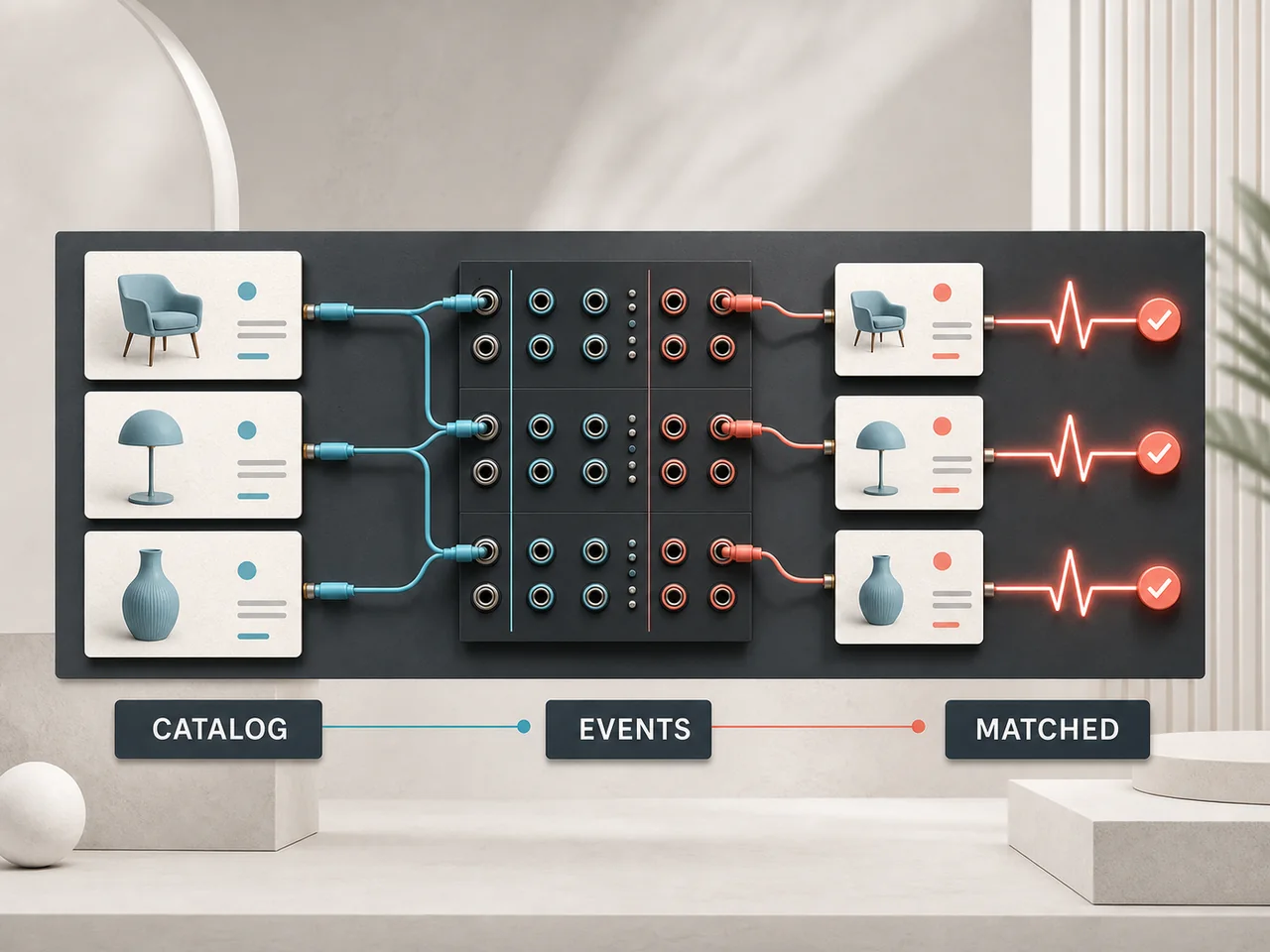
The connection is complete when catalogue, IDs and events agree.
Connecting an OpenCart eShop with Facebook and Instagram is not a Pixel that merely appears “active”. It is a controlled system: correct ownership of Meta assets, a reliable product feed, identical product IDs in the catalogue and events, consent before marketing tracking and tested measurement from ViewContent through to Purchase.
The right solution may use a suitable extension, a custom integration or an external feed service. That decision follows an audit of the real OpenCart installation — not a generic plugin list.
Technical review: 19 August 2026. Names and available features across the Meta ecosystem change. Before production work, confirm available assets, OpenCart version, consent requirements and the current options in Events Manager and Commerce Manager.
What is actually connected?
A typical setup involves a Business Portfolio, Facebook Page, professional Instagram account, ad account, product catalogue and dataset. The website supplies products to the catalogue and events to the dataset. Campaigns can use this information for measurement, remarketing and catalogue ads — without any guarantee of sales.
- Ownership: who has full control of the Page, catalogue, dataset and ad account.
- Product data: which source updates title, URL, image, price, availability and variants.
- Browser events: what the Pixel sends after a valid consent choice.
- Server events: whether and how Conversions API is used with correct deduplication.
- Operations: who monitors feed errors, event diagnostics and post-update changes.
Map the existing OpenCart installation first.
Record the OpenCart and PHP versions, theme, OCMOD/VQMod changes, checkout extension, languages, currencies, multi-store setup, tax and stock logic, cache/CDN and existing marketing scripts. Check for an existing Pixel, Tag Manager container, feed or legacy Meta Business Extension so a second competing data source is not introduced.
OpenCart, theme, checkout, multi-store
Feed, variants, price, availability
Pixel, CAPI, IDs, values
Consent, ownership, monitoring
The catalogue needs one dependable source of truth.
The product feed should update from actual eShop data, not a manual copy that goes stale. For every item, validate at least the ID, title, description, canonical URL, primary image, price, currency, availability, condition and brand where relevant. Variants need consistent grouping and explicit variant IDs.
Meta Commerce Manager is used to manage the catalogue and product data. Meta’s official Shops and catalogue guidance covers data feeds, variants and datasets. Exact commerce features depend on the country and account.
The content ID is the bridge between product and event.
If the catalogue knows a product as SKU-104, but ViewContent and Purchase send 104 or a different variant ID, the system cannot reliably match behaviour to the correct catalogue item. Define one ID policy and test it against a simple product, options or variants and a completed order.
SKU-104=EVENT CONTENT_IDSKU-104PASSWhich eCommerce events should be validated?
Meta describes Pixel installation and event configuration through Events Manager. For OpenCart, test real journeys rather than PageView alone: product view, add to basket, checkout start and confirmed purchase. See Meta’s official Pixel setup guidance.
| Event | Valid trigger | Core data to verify |
|---|---|---|
| ViewContent | Real product page | content_ids, content_type, value, currency |
| AddToCart | Successful basket addition | correct variant, quantity, value |
| InitiateCheckout | Actual checkout start | total and currency |
| Purchase | Confirmed order only | order/event ID, value, currency, items |
Pixel and Conversions API must not count the same purchase twice.
Conversions API can complement browser events with server-side delivery, but it is not a “second Purchase”. When browser and server send the same action, use matching event_name and event_id for deduplication. Meta recommends using CAPI with the Pixel where appropriate; the final architecture depends on requirements, consent and the ability to implement it reliably. See Meta’s official Conversions API overview.
Consent belongs inside the technical architecture.
Marketing tracking should not load as if it were strictly necessary for checkout. The consent layer must control when browser tags activate and how related server-side flows are handled. Implementation must agree with the privacy policy and should be assessed by an appropriate legal or privacy adviser. The EDPB guidelines on valid consent are a key reference.
Extension, custom integration or feed service?
There is no single answer for every OpenCart store. A maintained extension may cover a standard installation. Custom integration is often safer when IDs, ERP, B2B pricing, multi-store or checkout logic are unusual. A feed service may help with complex catalogue rules and multiple channels. Assess compatibility, data ownership, update policy, logs, operating cost and rollback capability.
Multi-store, languages and currencies change the mapping.
In multi-store OpenCart, do not assume that storefronts share one catalogue, domain, currency or availability rule. Define the valid URL, language feed, price and stock status per market. Avoid feeds that show a different price from the landing page or events using a different currency from the order.
What does real QA look like?
Build an acceptance matrix using test products and real journeys. Inspect browser requests, Events Manager Test Events, catalogue diagnostics, feed fetches, redirect and canonical URLs and the completed OpenCart order. “Active” beside a Pixel is not sufficient.
| Check | Accepted result | Typical failure |
|---|---|---|
| Product feed | correct price, stock, URL and image | stale cache or rejected item |
| ViewContent | ID present in the catalogue | product ID instead of variant, or reverse |
| Purchase | one purchase, correct value/currency | duplicate event or failed-order event |
| Consent | no browser marketing tag before choice | Pixel loaded by a second extension |
Most failures are agreement failures.
- Two Pixels or Purchase events from the theme, extension and Tag Manager.
- Catalogue IDs that differ from event
content_idvalues. - Feed prices excluding tax while the landing page includes it.
- Purchase sent before the order is confirmed.
- A stale feed URL after migration or domain change.
- Items without a canonical URL, valid image or real availability.
- Server events without deduplication or a documented consent policy.
- An extension incompatible with the OpenCart version or custom checkout.
Roll out through a small, reversible first step.
Start with backup and baseline evidence, connect a limited test scope, verify catalogue and events, retain logs and only then enable full synchronisation or campaigns. If duplicate events, incorrect prices, feed corruption or checkout regression appears, restore the previous state before continuing.
CATALOGUE MATCHPASS
EVENT DEDUPEPASS
CONSENTPASS
CHECKOUTPASS
READY FOR CAMPAIGNSWhen is the connection not yet the right priority?
If the eShop has inaccurate stock, unclear shipping, weak product pages, a problematic checkout or unreliable order measurement, advertising will expose those problems to more people. Stabilise the commercial and technical foundation before scaling acquisition.
What can Firstidea take responsibility for?
We map assets and ownership, audit the OpenCart installation, define product-feed and event-ID policy, implement or repair the connection, organise consent-aware tracking and provide an acceptance matrix. The technical connection sits within the right scope alongside OpenCart technical support, OpenCart eShop development, social media marketing and Digital Marketing.
Sources and limits of this guide.
- Meta Help — Set up and install the Meta Pixel
- Meta Business Help — About Conversions API
- Meta Help — Set up a shop and optimise catalogue data
- Meta Blueprint — Product catalogues
- EDPB — Guidelines 05/2020 on consent
This guide explains technical and operational principles. It is not legal advice or a promise of advertising performance. Exact steps depend on the OpenCart version, extensions, Meta account, country and consent policy.
Frequently asked questions about OpenCart and Meta.
Is installing an extension enough?
No. Ownership, catalogue mapping, events, consent and real tests still need to be correct. The extension is only one possible implementation mechanism.
Do I always need Conversions API?
It depends on the measurement plan and whether it can be implemented reliably and with appropriate consent handling. If combined with the Pixel, deduplication is required.
Why does the catalogue reject products?
Common causes include missing fields, price or stock mismatches, invalid URLs or images, unsupported values and incorrect variant structure. Read the specific diagnostic and correct the source.
Why do dynamic catalogue ads not match products?
Event content IDs often differ from catalogue IDs, or the dataset is linked incorrectly. Trace one exact item from the feed through to Purchase.
How do you prevent duplicate Purchase events?
Remove competing sources. When browser and server send the same action, use matching event_name and event_id values for deduplication.
Can multi-store OpenCart be connected?
Yes, but each storefront needs explicit mapping across domain, language, currency, catalogue and dataset. Do not blindly copy one setup to every store.
Should the Pixel load before consent?
Marketing technology must sit inside a valid consent design and privacy policy. Obtain appropriate legal or privacy review for your specific case.
How often should the product feed update?
Base the schedule on how often prices and inventory change. Minimise the period during which Meta and the eShop show different data.
How is a real purchase tested?
Use a controlled test order, inspect browser and server requests, Test Events and order status, then verify value, currency, items and event ID.
Can an update break the integration?
Yes. Theme, checkout, extension, cache, domain and consent changes can affect feeds and events. Regression tests and monitoring are required.
Does the connection automatically increase sales?
No. It improves data infrastructure and campaign capabilities. Results also depend on product, price, creative, audience, checkout and the commercial proposition.
Can Firstidea take over a failing existing connection?
Yes. We begin with audit and baseline evidence, identify ownership and data-flow problems and propose a controlled correction with rollback.