
Website redesign / reconstruction
Website redesign that protects what works and rebuilds what holds you back.
We redesign existing websites with new content architecture, UX/UI and a stronger technical foundation—without overlooking organic search, integrations and the daily operations they already support.
When redesign becomes necessary
When the website has fallen behind the business.
Age alone is not a reason to rebuild. The real question is whether the current foundation can explain, serve and evolve without disproportionate cost or risk.
- 01
The message no longer explains the business
Services, audiences or the company’s position have changed while the website remains organised around old priorities.
- 02
The experience obstructs decisions
Navigation, mobile use, forms and calls to action create friction instead of helping visitors understand and proceed.
- 03
The technical foundation limits every improvement
An old theme, disconnected plugins, an awkward CMS or accumulated interventions make even small changes slow and risky.
- 04
Organic visibility cannot survive a careless move
Pages, backlinks, search visibility and history must be inventoried before URLs, content or platform change.
Redesign workstreams
A new visual direction is only one part of reconstruction.
Message, content, design, technology and organic continuity develop together so the new version solves real problems and remains manageable.
Message strategy & architecture
We clarify audiences, services, core questions and journeys before new screens are designed.
Content worth retaining
We assess which pages remain useful, which need rewriting and which can be consolidated safely.
UX/UI & accessibility
We design consistent components, responsive behaviour, clear focus and usable journeys around real content.
CMS & technical architecture
WordPress, another suitable platform or a custom build is chosen around functionality, team needs and maintenance.
SEO migration & redirects
URLs, metadata, internal links and organic data are inventoried, with explicit mappings prepared before cutover.
Performance, analytics & QA
We test speed, scripts, forms, tracking, browsers, devices and critical journeys before and after publication.
Improve or reconstruct?
We do not discard a working foundation simply to change its appearance.
The initial review separates content, experience and technology problems. That allows us to recommend targeted improvements, staged redesign or a new build for defensible reasons.
Retain
Content, URLs, data and functionality that remain useful and dependable.
Improve
Pages and components that can be corrected without replacing the full foundation.
Rebuild
Areas where the current architecture obstructs safety, usability or future development.
Migrate carefully
URLs, tracking, forms and integrations move to the new version through explicit mappings.
SEO-safe migration
Publication should not erase the business’s digital history.
Before a route changes, we inventory what exists, identify the page that will replace it and prepare search engines, analytics and internal links for the move.
Read the detailed guide to planning a website redesign with a controlled SEO migration.
- 01
URL inventory
Crawl, sitemap, Search Console, analytics and backlink data are brought into one inventory.
- 02
Redirect map
Every old page maps to the right new destination, not generically to the homepage.
- 03
Pre-launch QA
Canonical tags, metadata, schema, internal links, robots and XML sitemaps are checked before release.
- 04
Post-launch review
Crawl errors, indexation, redirects and key actions are monitored after cutover.
Practical review guide
Five common mistakes a redesign should correct—not carry into the new version.
Firstidea’s detailed guide covers speed, mobile experience, message clarity, calls to action, trust, SEO and accessibility.
Read the web design guide ↗︎Related web design & development work
Different decisions about content, experience and technology.
These case studies demonstrate relevant design and development capabilities. They are not presented as documented reconstructions of existing websites.

Vantarakis Vet
Clinical information, services and enquiry journeys within a clean custom WordPress foundation.
View the case study ↗︎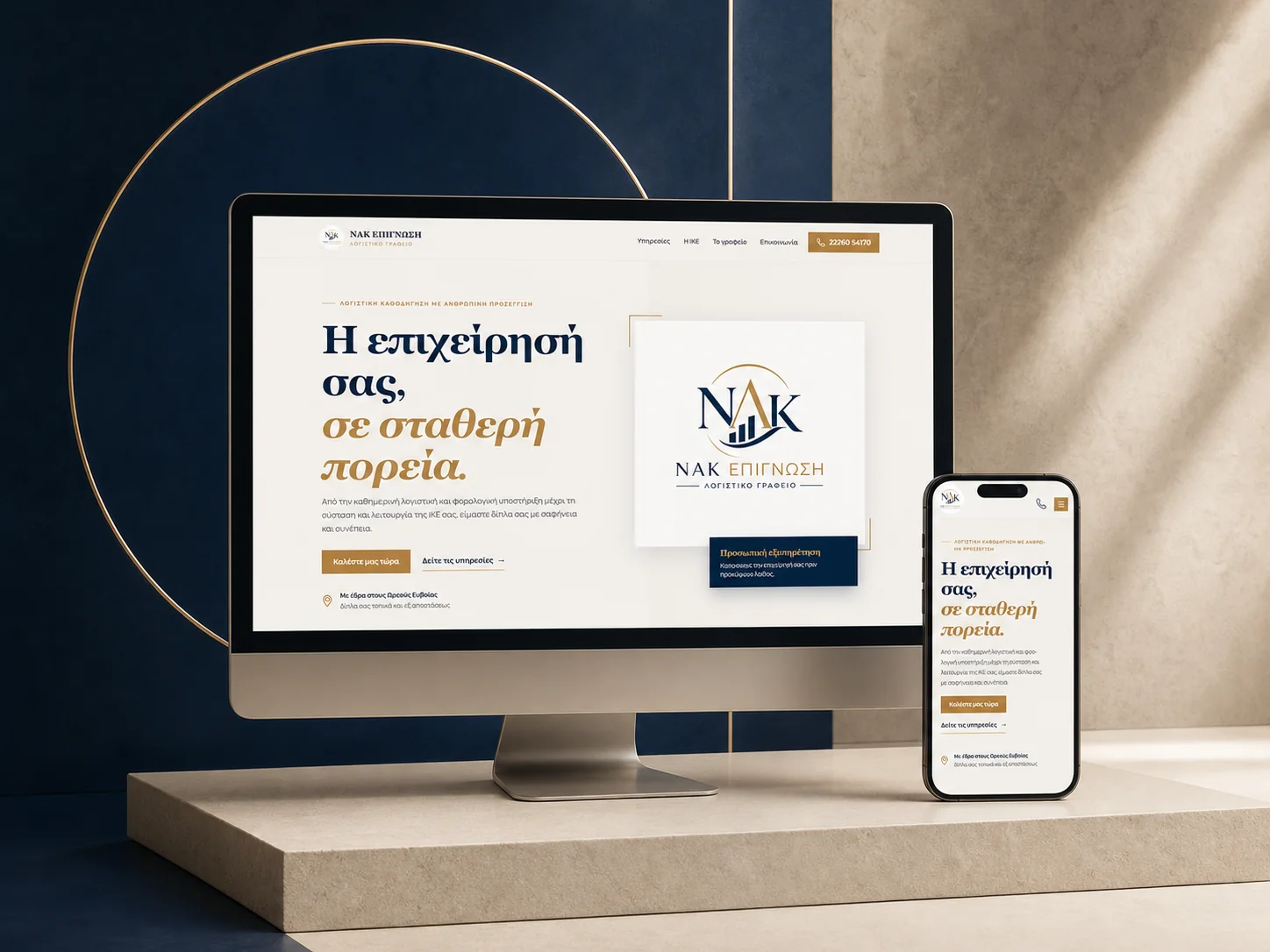
NAK Epignosi
A lightweight single-page experience with clear hierarchy, services and direct enquiry routes.
View the case study ↗︎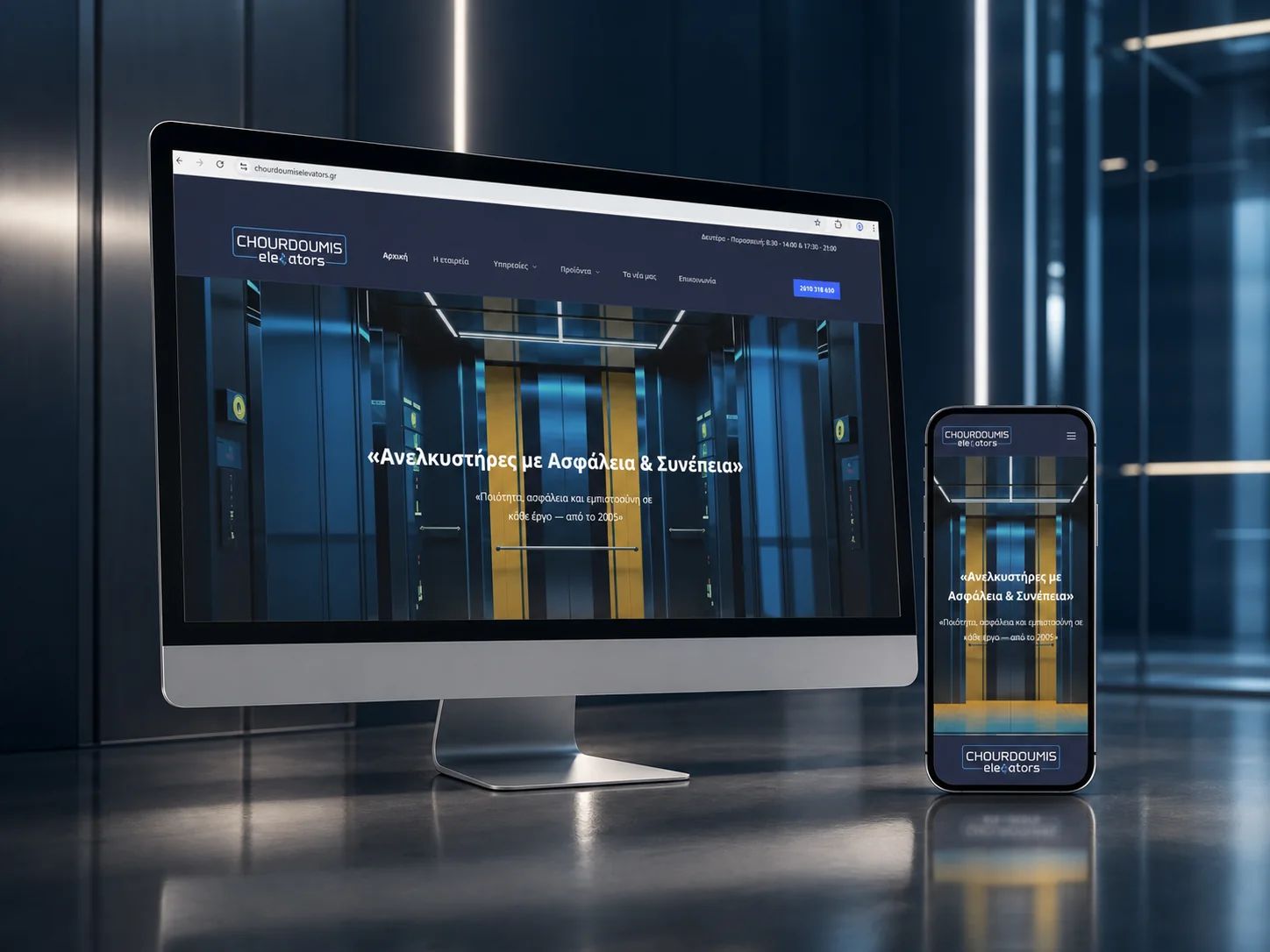
Chourdoumis Elevators
Services, safety and technical expertise organised into a consistent corporate journey.
View the case study ↗︎From inventory to the new release
Five stages built around real content and controlled migration.
Critical decisions are documented before publication so the team understands what changes and why.
- 01
Understand the current website
We gather content, URLs, analytics, Search Console, technology, integrations and the team’s real requirements.
- 02
Decide: improve or rebuild
We explain what can be corrected in the existing foundation and what requires new architecture, without assuming a full rebuild.
- 03
Develop content and design together
Wireframes, copy and the visual system evolve around real pages and defined user actions.
- 04
Build and migrate carefully
The new implementation is tested on staging while redirects, forms, integrations and tracking are prepared for cutover.
- 05
Launch and verify the transition
We review crawling, indexation, redirects, analytics, performance and real actions so issues can be found quickly.
Redesign with continuity
Tell us what the current website no longer serves.
We will assess what is worth retaining, what needs to change and how the transition can be made with controlled risk.
Request an initial assessment ↗︎FAQ
Frequently asked questions about website redesign and reconstruction.
Answers about platforms, content, SEO migration, staging, timing and support.
When is a rebuild better than targeted improvement?
When content, structure, user experience and the technical foundation all need substantial change, reconstruction may be safer than repeated patches. If targeted corrections can solve the problem, we will say so.
Does redesign always mean changing platform?
No. We can redesign within the current platform, replace a theme or architecture, or migrate the website. The decision follows functionality, content and maintainability.
Can organic SEO be preserved?
Our aim is to protect organic value through URL, query, backlink, content and internal-link inventories, controlled redirects and post-launch checks. It would not be responsible to promise zero ranking fluctuation.
What happens to old content?
Each page is assessed for usefulness, traffic, backlinks, accuracy and its role in the new architecture. It may be retained, improved, consolidated or retired with an appropriate URL mapping.
Do you handle structure and copy?
Yes. We can develop content strategy, page briefs and copywriting. The business still needs to provide accurate facts, specialist knowledge and final approval.
Will the full website be designed in Figma first?
Depending on the project, we use wireframes and high-fidelity prototypes for critical pages and components. We do not automatically design every final variation outside the browser when a structured design system is better developed with real content.
Can the old website stay online while the new one is built?
Yes. Development takes place on protected staging while the current website continues to operate. Cutover is planned with backups, a checklist and a defined sequence.
What happens to forms, CRM and other integrations?
They are inventoried early and tested with representative scenarios. Their transfer is not assumed to be automatic, especially when they rely on old custom code or third-party services.
Are speed and accessibility improvements included?
The new foundation is designed with performance and accessibility in mind. The testing level, third-party constraints and any WCAG requirements are defined in the proposal so they can be verified.
How long does a website reconstruction take?
Timing depends on template depth, content, approvals, integrations and SEO migration. After the initial review we provide stages, deliverables and a realistic schedule.
Do you provide support after launch?
Yes. We can cover hosting, updates, backups, security, monitoring, content changes and future releases under clearly defined service terms.