
WordPress strategy / design / development
WordPress website development with custom design, Gutenberg and clear technical ownership.
We design and develop custom WordPress websites with structured content, controlled blocks, SEO/GEO, performance and integrations — so your team can genuinely manage and evolve them.
WordPress beyond the off-the-shelf template
A strong WordPress website is designed for its audience and organised for the team that will run it.
We do not start with a demo theme or fill screens before the strategy is clear. We connect positioning, sitemap, content, evidence and conversion through a custom visual system.
We then turn that system into native Gutenberg blocks, clear permissions and controlled technical dependencies. Daily content management stays flexible without sacrificing consistency, performance or ownership.
Platform fit
When WordPress is the right foundation for a professional website.
Popularity is not enough. We assess whether the platform serves publishing, languages, integrations, lifecycle and the team responsible for day-to-day management.
- 01
The team publishes and evolves content frequently
Gutenberg is organised into controlled blocks and patterns so new pages and updates do not break the design system.
- 02
Organic content is part of the growth model
Services, case studies, articles and topic hubs operate inside one architecture for search and answer engines.
- 03
The website needs roles, languages or integrations
WPML, forms, CRM, bookings and third-party services are integrated with clear data ownership and controlled dependencies.
- 04
The business wants genuine technical ownership
We hand over manageable content, documentation, access and a clean codebase — not dependence on an inflexible template.
WordPress in practice
Selected websites for different content, audiences and operational needs.
These projects remain internal, documented case studies rather than external exits from the landing page.

Vantarakis Vet
A custom WordPress presence for services, diagnostic infrastructure and clear enquiry paths.
View the case study ↗︎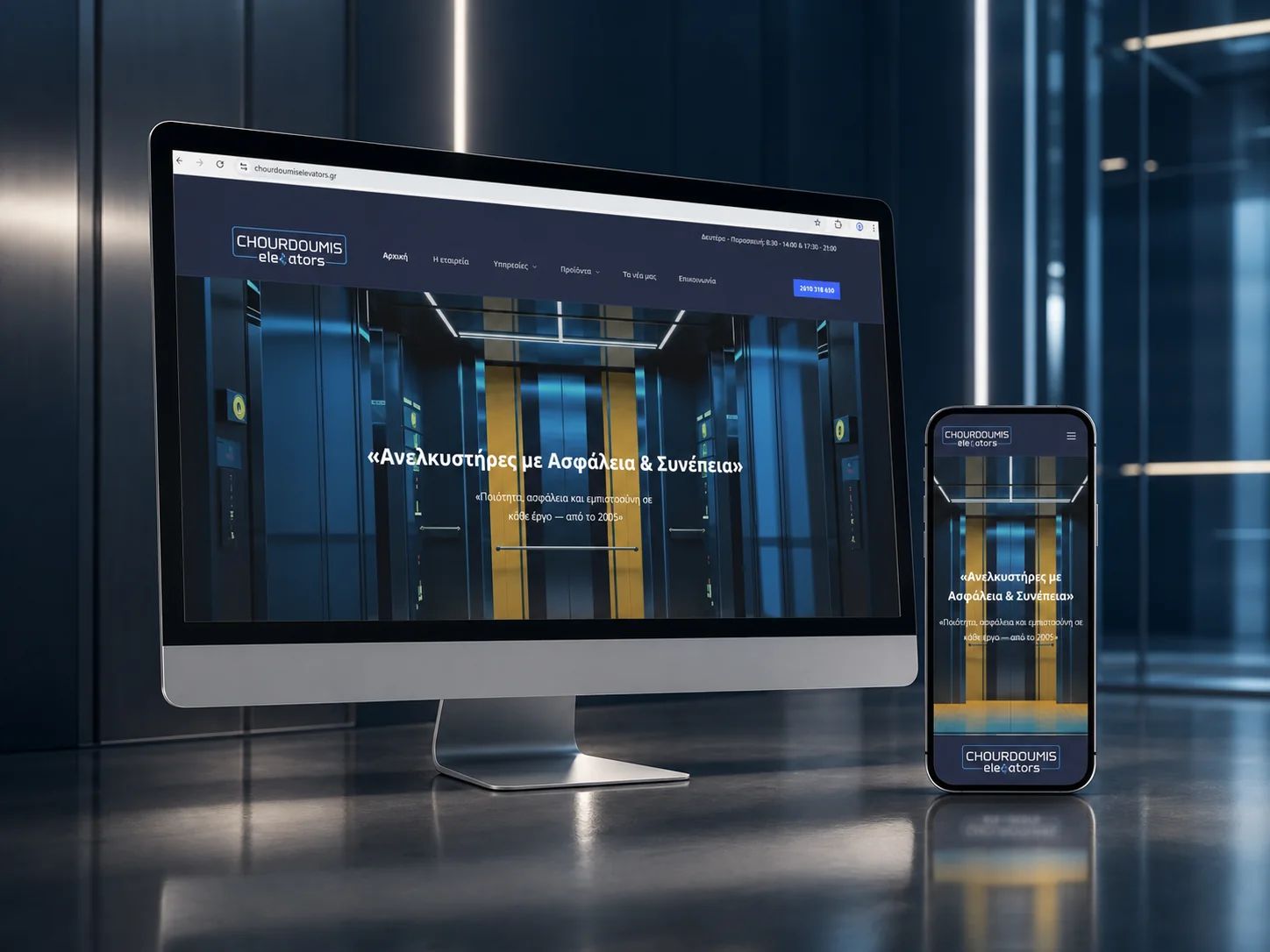
Chourdoumis Elevators
Service and technical-information architecture for professional audiences and focused enquiries.
View the case study ↗︎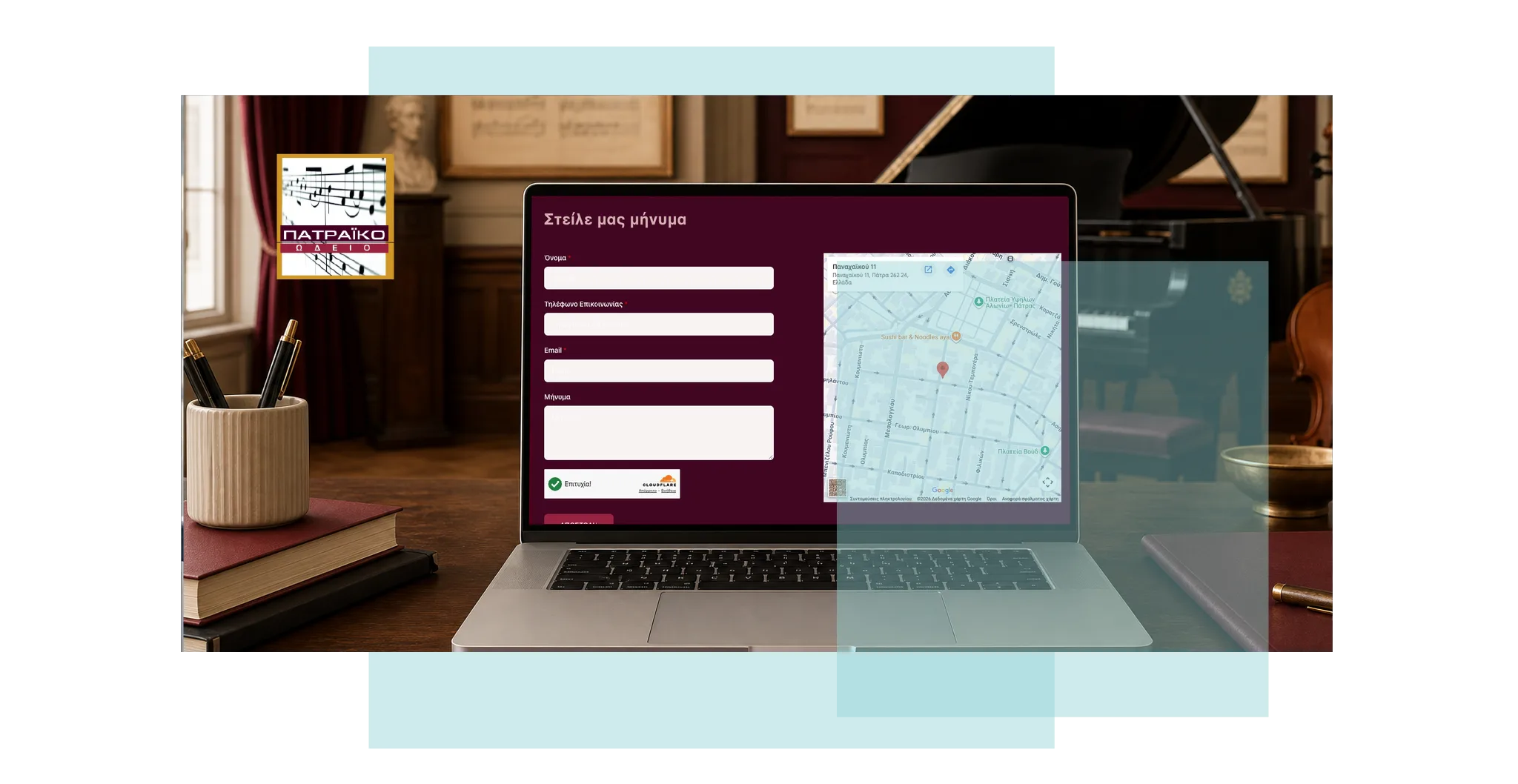
Patraiko Odeio
Educational content, programmes and news organised as a manageable WordPress experience.
View the case study ↗︎WordPress development scope
What we design and build beyond installing a CMS.
Strategy, content, experience and the technical foundation operate as one system. The exact scope is agreed before development begins.
Strategy, intent & sitemap
We map audiences, goals, competition, URLs and the paths from a need to a meaningful enquiry.
Custom UX/UI & block system
We design a visual system around the brand and turn it into responsive Gutenberg blocks and reusable patterns.
Content & multilingual architecture
We define hierarchy, templates, taxonomies, governance and an independent experience for every language where WPML is required.
Integrations & specialist functionality
CRM, bookings, newsletters, APIs and business workflows are connected through clear rules, logging and failure handling.
Performance, security & accessibility
Hosting, caching, images, plugin governance, access, backups, keyboard use and reduced motion are designed in from the start.
Technical SEO, GEO & measurement
Semantic HTML, metadata, schema, internal links, canonicals and consent-aware analytics form part of the implementation.
Management and ownership
Freedom where it helps. Guardrails where they protect the brand and the operation.
Editorial autonomy does not mean every user should change every visual or technical parameter. We organise roles, reusable patterns and design tokens so the team can publish safely.
- Native blocks and controlled patterns
- Clear roles, permissions and workflow
- Fewer, properly assessed dependencies
- Access, documentation and training at handoff
From strategy to launch
A process that resolves the architecture before writing code.
Critical decisions are made before implementation becomes expensive. Staging, QA and the migration plan protect both the experience and organic visibility.
- 01
Discovery & content audit
We understand goals, audiences, existing content, data, integrations and constraints before choosing the architecture.
- 02
Architecture & prototype
We define the sitemap, URLs, templates, user journeys and editorial model and validate them before full visual design.
- 03
Custom design & Gutenberg build
We build the responsive visual system, blocks and functionality in a controlled staging environment.
- 04
Migration, QA & launch
We verify content, redirects, SEO, accessibility, performance, forms, analytics and the rollback plan before release.
- 05
Training & continuous care
We hand over access, training and documentation and, where agreed, continue with updates and technical support.
FAQ
Frequently asked questions about WordPress website development.
The platform is only part of the decision. Architecture, content, ownership, integrations and lifecycle determine whether the solution remains useful.
What does custom WordPress website development mean?
The strategy, architecture, design system and core templates are created for the specific business. WordPress acts as a mature content-management system rather than an excuse to reuse a theme that makes many sites look and behave alike.
Do you use Gutenberg or a page builder?
We prefer native Gutenberg with controlled blocks and patterns because it reduces dependency on heavy page builders and provides safer editorial autonomy. If an existing site relies on another builder, we first assess the real cost and risk of changing it.
Will our team be able to edit text and images?
Yes. We define which elements should remain flexible, which need guardrails and which should be reusable. Training helps the team update content without losing visual or technical consistency.
Can the website be multilingual?
Yes. We design URLs, navigation, metadata, hreflang and content by language. With WPML or another suitable solution, each language remains a complete experience rather than an incomplete automated translation.
Are SEO and GEO included in the build?
The technical and structural foundations are included: search intent, semantic templates, metadata, schema, internal links, performance and answer-first content. We do not promise rankings; continuous organic growth requires its own content and measurement plan.
How do you approach performance and Core Web Vitals?
We set performance budgets, optimise assets and images, control JavaScript and plugins and test real mobile and desktop pages. Final field performance also depends on content, hosting and third-party services.
Is WordPress secure?
WordPress can be a secure foundation when the plugin stack is controlled and access, updates, backups, monitoring and incident response are managed properly. Security is an ongoing operation, not a one-off setting at launch.
Can you migrate an existing website to WordPress?
Yes. We map content, URLs, metadata, media, forms, analytics and integrations, plan redirects and test the migration in staging to protect useful data and organic visibility.
Can you rebuild a problematic WordPress website?
Yes, following an audit. If the architecture and content are worth preserving, we propose a focused rebuild. If support and targeted fixes solve the underlying problem, we do not recommend an unnecessary new project.
Can WordPress connect to a CRM, bookings or other systems?
Yes, when the required APIs or technical specifications are available. We define the source of truth, data, permissions, failure handling and monitoring before implementing an integration.
Do you also build eCommerce stores with WordPress?
Yes, through WooCommerce, but it is a separate commerce scope covering catalogue, checkout, payments, shipping, orders and integrations. A dedicated WooCommerce eShop development service handles that intent.
Do you provide support after launch?
Yes. We can continue with managed hosting, backups, updates, security, performance and ongoing improvements. There is also a separate takeover service for WordPress and WooCommerce sites built by another team.