
FOOD & HOSPITALITY WEBSITE DEVELOPMENT
Shape the guest experience before the first visit.
We design websites for restaurants, cafés, bars and food-led venues that help people find the right location, understand the current menu and move towards a booking, an order or a visit without unnecessary friction.
WHAT THE WEBSITE NEEDS TO ACHIEVE
The right information appears at the point of decision.
A hospitality website is more than a visual statement and a phone number. It connects product, place, availability and the next action in one clear mobile journey.
- 01
The right venue is easy to find
Addresses, opening hours, maps, facilities and different menus are organised around each real service location.
- 02
A menu designed for reading
Categories, prices, descriptions and essential information work as responsive content rather than living only in a difficult PDF.
- 03
A clear route to booking or ordering
Visitors understand whether to call, send an enquiry, use a booking tool or continue to an external ordering platform.
- 04
A stronger local presence
Pages connect the offer, place, consistent business information and useful answers without mechanically repeating location names.
DESIGN SCOPE
Content, functionality and daily updates are designed as one system.
The exact scope depends on the venues, ordering model and operational systems the business already uses.
Brand, concept and location architecture
We organise the central proposition, individual venues, services and the different questions each audience needs answered.
Digital menus and product content
We design readable categories, photography direction and a practical way for the team to update prices or availability.
Bookings, enquiries and calls
We integrate an appropriate route only when it fits the venue operation and can be supported consistently.
Delivery and online-ordering journeys
We connect an owned or third-party platform with clear boundaries, appropriate tracking and a purposeful return journey.
Local SEO, GEO and structured data
We build useful landing pages, consistent location signals, internal links and appropriate Restaurant or LocalBusiness data where the facts support it.
Analytics, maintenance and growth
We measure meaningful actions, define content ownership and plan safe improvements after launch.
OPERATIONS BEHIND THE EXPERIENCE
Menus, opening hours and guest journeys need to remain dependable.
Trust breaks when the website, Google Business Profile and ordering platforms publish different information. The operating model defines who updates each source and when.
- 01
Content ownership
We document who updates menus, prices, seasonal choices, hours and the details of each venue.
- 02
Mobile performance
Images, fonts and scripts are reviewed for responsive use in realistic mobile conditions.
- 03
Integration boundaries
Booking, delivery and payment providers are recorded with account ownership, fallback behaviour and failure states.
- 04
Accessible information
Contrast, focus, semantic headings, alternatives and forms are designed for real use rather than added as a final badge.
RELATED WORK
Digital experiences built around flavour, service and personality.
These case studies show real content and presentation decisions in the culinary sector. They are not presented as identical business models.
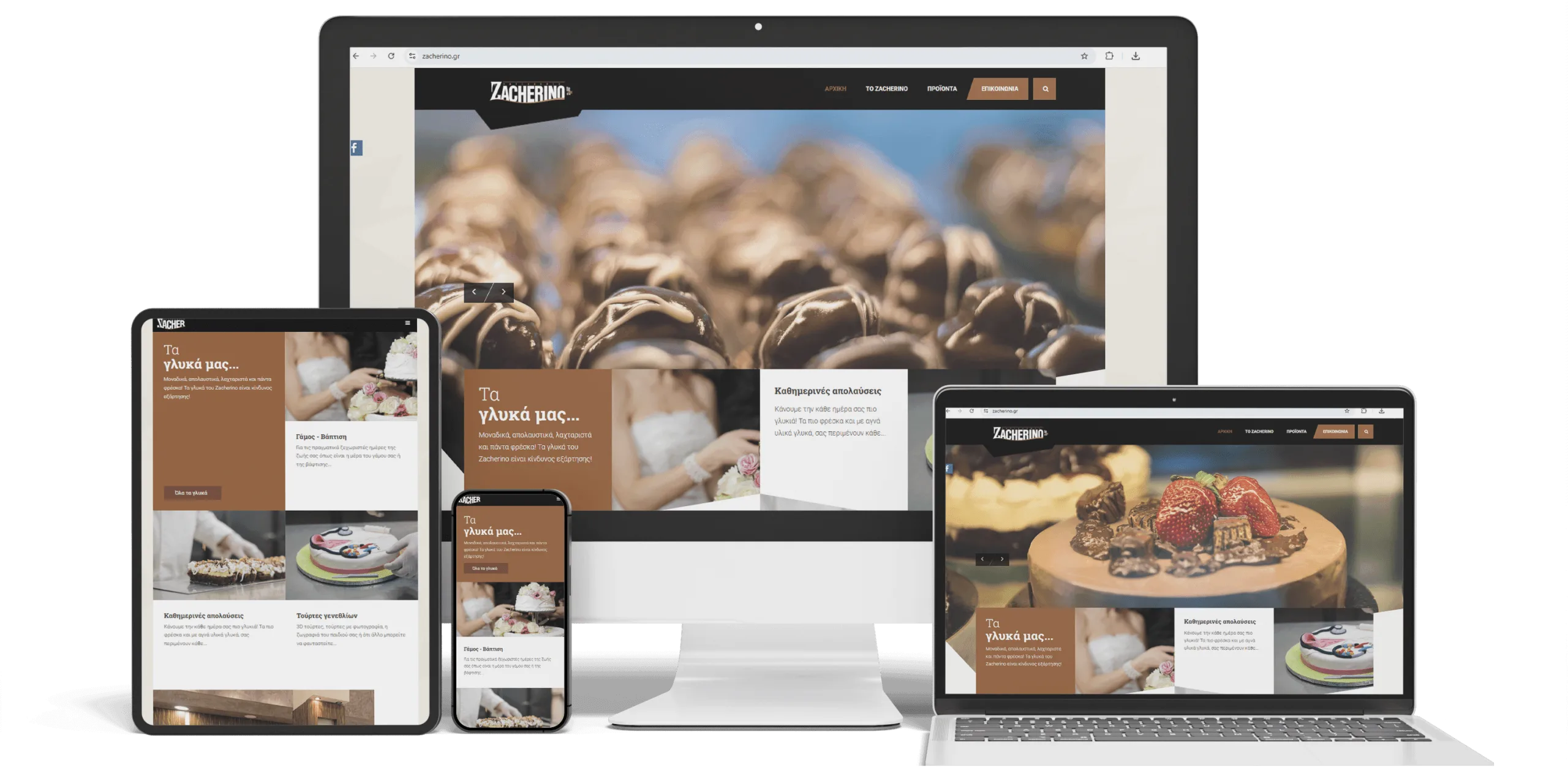 Website · Patisserie brand
Zacherino
A brand-led website that organises products, identity and locations into a clear visual experience.
Zacherino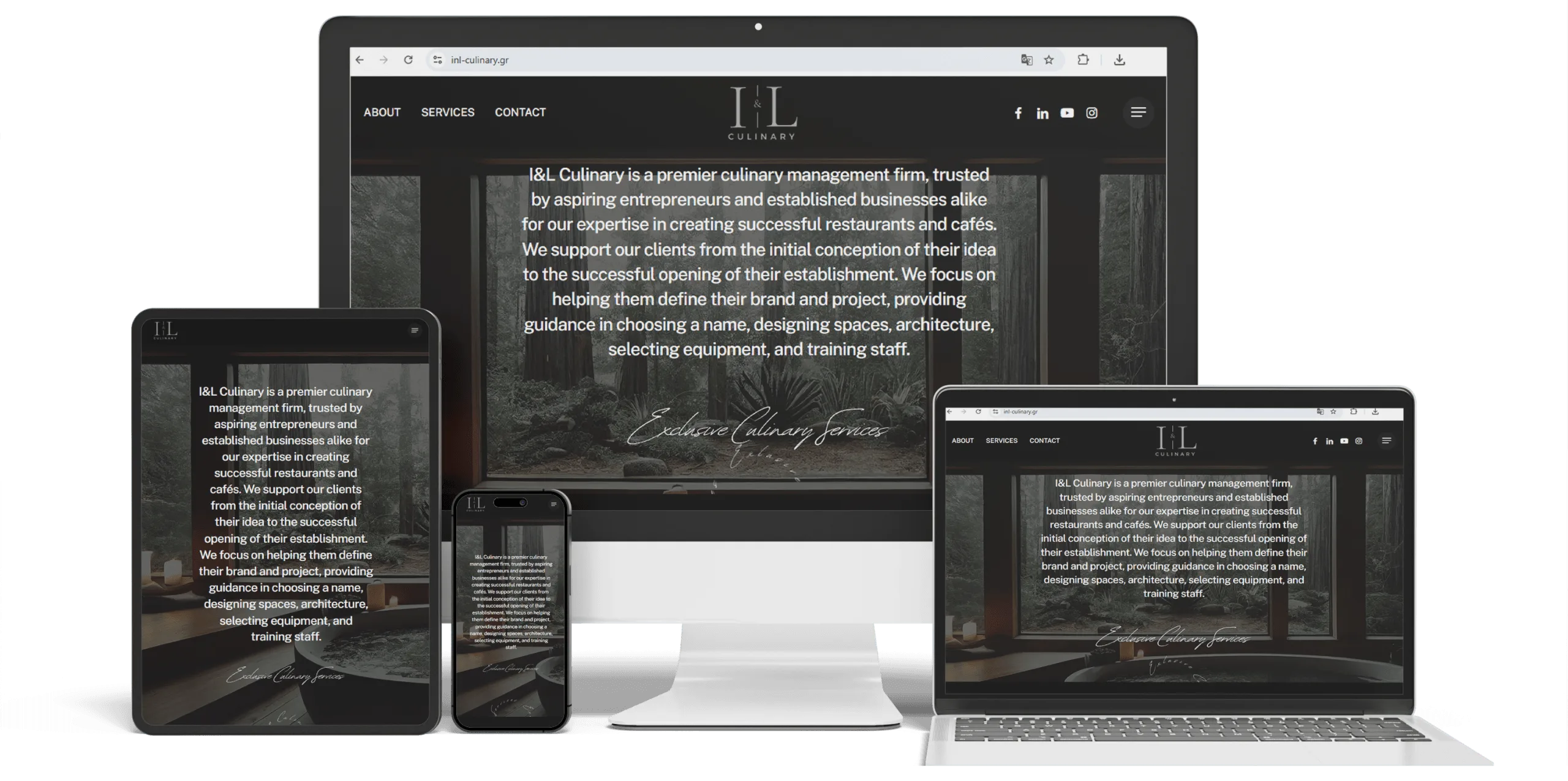 Website · Culinary services
I&L Culinary
A focused presentation of services and culinary direction with strong imagery, structure and direct contact routes.
I&L CulinaryFROM CONCEPT TO LAUNCH
The process begins with how the venue actually operates.
Before designing screens, we map locations, audiences, menus, systems and update responsibilities.
- 01
Discovery and inventory
We document the brand, venues, menus, booking, delivery, source material and existing accounts.
- 02
Architecture and content
We define URLs, pages, categories, local signals and what the business needs to write or approve.
- 03
UX and visual direction
We design mobile-first journeys, art direction and reusable components.
- 04
Development and integrations
We implement the agreed CMS or custom front end and test every external journey.
- 05
QA, training and improvement
We test content, forms, tracking and devices, train the team and define the next operating cycle.
QUALITY STANDARDS
A premium visual identity without sacrificing usability.
Aesthetics support choice and trust. They should never obscure the menu, the location or the next action.
Responsive by design
Critical journeys begin with small screens and touch interaction.
SEO/GEO foundation
Crawlable content, canonical URLs, metadata, schema and useful answers support search and AI discovery.
Consent and measurement
Analytics and marketing tags follow a documented event plan and an appropriate consent setup.
Operational handover
The team receives access, guidance, ownership and an update process rather than an opaque website.
THE NEXT GUEST JOURNEY STARTS ONLINE
Let us design a website that makes choosing easier.
Tell us how the venues, menus, bookings and orders work today. We will recommend a clear scope, structure and next steps.
Discuss the projectFAQ
Restaurant and café website FAQs
Practical answers about menus, bookings, delivery, Local SEO and daily management.
What should a restaurant or café website include?
Most venues need a clear proposition, menu, location and opening hours, contact details, useful visit information and an obvious next action. Bookings, delivery, events, multiple locations or eCommerce belong only when they reflect the real operation.
Should the menu be a PDF or a proper web page?
A crawlable responsive HTML structure is usually easier to use on mobile, more accessible, simpler to update and more useful for organic search. A PDF can remain as a secondary download rather than the only menu format.
Can the website connect to a booking system?
Yes, when the provider offers a dependable embed, link or API and the business owns the correct account. We review data, mobile behaviour, confirmations, tracking and account ownership before implementation.
Do you build online ordering and delivery journeys?
We can design an owned ordering flow or connect a third-party platform. The decision depends on the catalogue, payments, delivery areas, kitchen operation, commissions and who will manage orders every day.
How can the website support Local SEO and GEO?
Through consistent business information, genuinely useful location pages, sound structure, metadata, schema, internal links and content that answers real questions. We do not guarantee a specific ranking or inclusion in an AI-generated answer.
Can each location have its own page?
Yes, when each venue has genuinely different details, hours, services or useful local content. Pages should not be duplicates with only the place name changed.
Who updates prices, hours and seasonal menus?
That responsibility is defined in the scope. We can provide a CMS and training or an agreed ongoing support service. In both cases, ownership and approval steps are documented.
Do we need professional photography?
Original high-quality imagery can make a substantial difference in food and hospitality. Photography direction or production can be scoped separately, including locations, deliverables and usage rights.
How long does a hospitality website take?
Timing depends on locations, content, languages and integrations. We confirm the schedule after discovery, together with deliverables, approval stages and technical dependencies.