
TECHNICAL & INDUSTRIAL WEBSITES
Technical websites that turn capabilities, applications and specifications into clear commercial information.
An engineer, procurement manager or technical partner does not need broad slogans. They need to find the right solution, verify compatibility and documentation, and submit a complete request for quotation.
FROM TECHNICAL KNOWLEDGE TO A B2B ENQUIRY
Expertise becomes searchable, comparable and usable.
Content is organised around applications, technical parameters and commercial journeys rather than internal product categories alone.
- 01
Clear technical positioning
Industries, capabilities, certifications and geographic coverage are stated without vague claims.
- 02
Discovery by application
Visitors can begin with a problem or use case and reach an appropriate service or product.
- 03
Documentation in context
Datasheets, certificates, CAD files and manuals connect to the solution and are managed as versions rather than scattered PDFs.
- 04
More complete RFQs and leads
Industry, application, quantity, specifications and files are collected through a secure, understandable journey.
WHAT WE DESIGN
A corporate presence, technical catalogue and lead system on one consistent foundation.
The scope can be a focused technical website or a complex product-and-document system. Complexity follows the inventory and real workflows.
Services, capabilities and industries
Pages explaining what the business delivers, for which applications and with which boundaries or prerequisites.
Technical product catalogue
Categories, families, attributes, variants and filters modelled from real data.
Specifications and downloads
Structured technical values, versioned documents, certifications and clear product or application relationships.
Case studies and applications
Projects, use cases and installations that demonstrate suitability without exposing confidential information.
RFQ and B2B enquiries
Purpose-built forms, uploads, routing and notifications that collect a useful brief rather than just an email.
ERP, PIM and B2B integrations
Connections to existing systems after source of truth, IDs, synchronisation, ownership and failure handling are agreed.
INVENTORY ARCHITECTURE
Products, applications and documents connect as data — not through manual links.
A robust content model enables search, filters, related content, reuse and future integration without duplicating maintenance.
- 01
Product identity
A stable SKU or ID, family, status and core relationships that do not change arbitrarily.
- 02
Technical attributes
Units, limits, materials, power or dimensions use consistent terminology.
- 03
Applications
Each solution connects to industries and use cases through controlled relationships.
- 04
Documents
Files have a type, version, language, related product and responsible owner.
RELATED WORK
Elevator systems, technical services and hydraulic equipment.
Three projects with different catalogue depth and B2B journeys show how structure adapts to the technical subject.
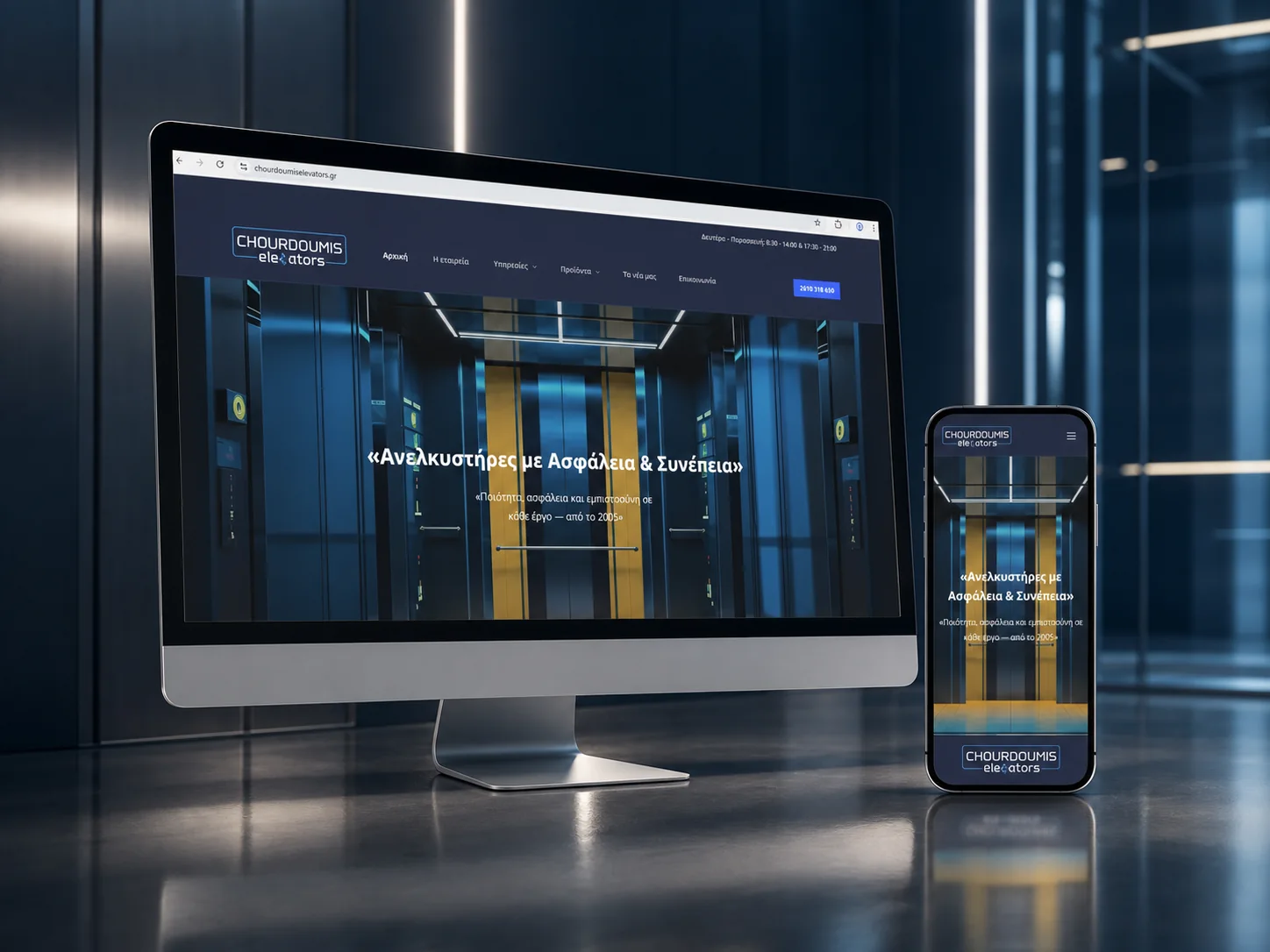 ELEVATOR SYSTEMS
Chourdoumis Elevators
A corporate and technical presentation of elevator solutions with clear application and contact paths.
Chourdoumis Elevators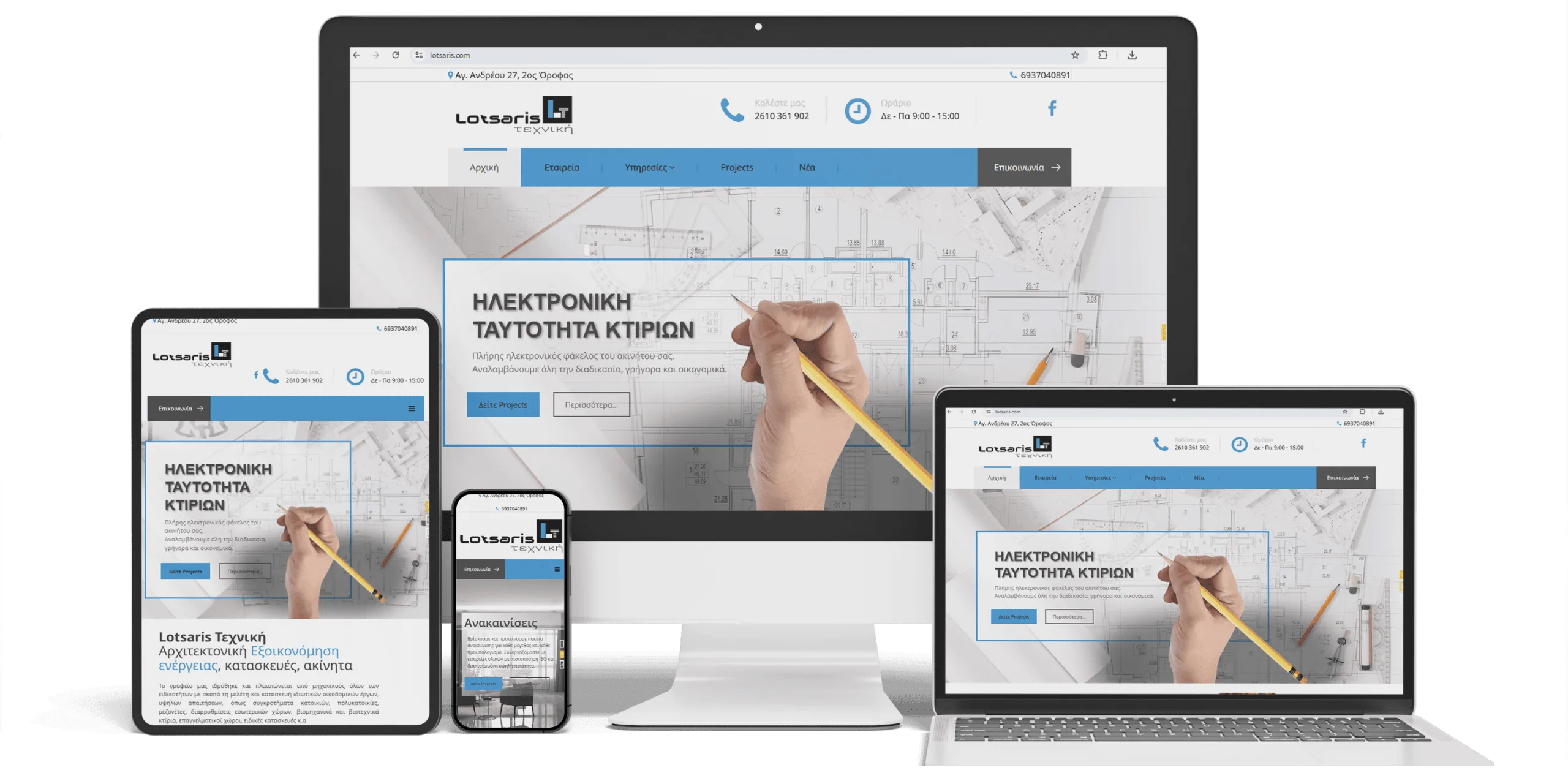 TECHNICAL SERVICES
Lotsaris Technical
Services and technical capabilities organised around the professional buyer’s need.
Lotsaris Technical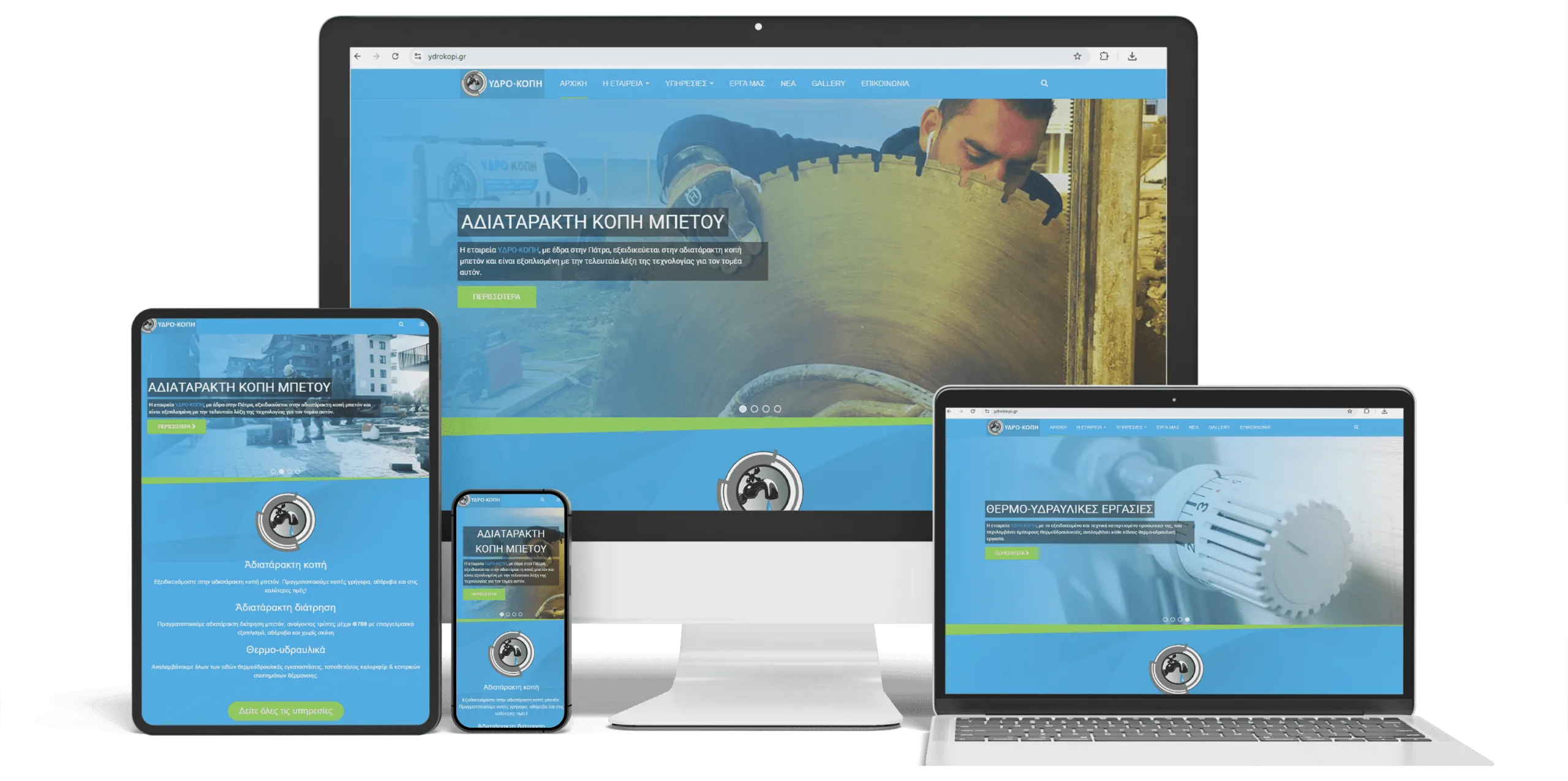 HYDRAULIC EQUIPMENT
YDRO-KOPI
Technical scope, equipment and B2B contact inside a focused corporate presence.
YDRO-KOPIPROCESS
We begin by understanding the inventory and the people who use it.
Information is mapped with technical, sales and data teams before the interface is designed.
- 01
Discovery and data audit
We document services, products, attributes, files, applications, languages and existing systems.
- 02
Taxonomy and content model
We define families, filters, relationships, IDs and rules that can support real inventory.
- 03
Prototype with sample inventory
We test search, filters, product/application pages and RFQ using representative content.
- 04
Development and migration
We build components, imports, roles and agreed integrations with logging and controlled fallbacks.
- 05
QA and governance
We test data, URLs, schema, files, forms, performance and the post-launch update cycle.
DELIVERY STANDARDS
Technical accuracy, operational resilience and full ownership.
The foundation must support sales and technical documentation without locking the business into opaque tools.
Search-ready
Clear information hierarchy, indexable landing pages and crawl controls for filters and parameters.
Accessible
Tables, downloads, filters and forms work with semantic structure and keyboard support.
Maintainable
Data ownership, import rules, documentation, roles, backups and staging before critical changes.
Integration-safe
Stable IDs, validation, logs, retries and explicit handling of synchronisation failures.
TECHNICAL WEBSITE PROJECT
Let us organise technical knowledge into a system that supports sales.
Tell us which services or products you offer, where the data lives today and how a technical enquiry reaches your team. We will propose a content model, scope and safe implementation path.
Discuss your technical websiteFAQ
Technical and industrial website development FAQs
Answers about catalogues, specifications, RFQ, B2B SEO and integrations.
Do we need a corporate website, catalogue or eCommerce store?
It depends on whether visitors need information, technical selection, a quotation or immediate ordering. Corporate content and a catalogue can work together without forcing checkout where it does not fit.
Can you organise many technical attributes and filters?
Yes, after a data audit. We define normalised attributes, units, variants and filters from representative inventory so the system does not create dead-end categories.
How are datasheets, certificates and manuals managed?
As versioned files with a type, language, product or application relationship and responsible owner, reducing outdated documents and broken links.
Can an RFQ form accept technical files?
Yes, with controlled file types and sizes, secure storage, retention rules and routing. We avoid unrestricted uploads into a general inbox.
Can the website connect to ERP or PIM?
Yes, when there is a suitable API or secure exchange mechanism. Mapping, source of truth, IDs, frequency, validation and a failure plan come first.
How does SEO work for technical terminology?
Through substantial application and product pages, consistent terms, structured data, internal relationships and real selection questions — not repetitive keyword pages.
Can it support multiple languages for export markets?
Yes. Each language has complete navigation, translated specifications and files, correct URLs/hreflang and controlled terminology.
Can an existing catalogue be migrated without losing SEO?
Yes, with URL and data inventory, mapping, migration tests, redirects, metadata, canonical rules and post-launch monitoring. The plan is completed before production changes.
Is technical support available after launch?
Yes. Support can cover updates, security, monitoring, imports, integration failures, inventory changes and ongoing technical and SEO improvement.