
LAW FIRM WEBSITE DEVELOPMENT
Build trust through clarity, evidence and restraint.
We design websites for lawyers and law firms that explain who they help, where their experience sits and how an appropriate first enquiry begins—without vague superlatives or promises about legal outcomes.
WHAT A VISITOR NEEDS TO UNDERSTAND
Who the firm is, what it handles and what the next safe step looks like.
People often arrive with uncertainty or time pressure. Information needs to be accurate, usable and organised around the decision they are trying to make.
- 01
Clearly defined practice areas
Services are organised around a real audience, matter and useful questions rather than an undifferentiated list of legal terminology.
- 02
A visible professional identity
Profiles, languages, roles and publications use information that the firm has sourced and approved.
- 03
A responsible first enquiry
Forms, telephone routes and guidance explain what can be sent, what does not establish representation and when another urgent route may be required.
- 04
Substantive organic discovery
Architecture connects services, audiences, locations and real questions without thin pages or unsupported claims.
LAW FIRM WEBSITE SCOPE
Design supports credibility and access to the right information.
The structure responds to the size of the firm, its practice mix, languages and the way it qualifies an initial enquiry.
Positioning and information architecture
We translate the structure and focus of the firm into understandable journeys for individuals, businesses or international audiences.
Practice-area pages
Each page defines the matter, intended audience, useful information and appropriate call to action.
Lawyer profiles and evidence
We create consistent structures for biographies, languages, experience, memberships and publications, with source and approval ownership.
Insights and editorial governance
Articles and updates gain taxonomy, authorship, review dates and a responsible publishing workflow.
Contact intake and privacy
We limit forms to necessary fields, explain their purpose and avoid collecting sensitive detail without a justified need.
Multilingual SEO/GEO and migration
We preserve useful URLs, design complete language pairs and strengthen the firm entity without doorway pages.
TRUST THAT CAN BE REVIEWED
Every material claim needs a source, an owner and a review date.
The website does not replace legal advice and does not promise an outcome. It records who approves the content, how it is maintained and how enquiries are protected.
- 01
Source-led profiles
Qualifications, roles, languages and memberships are published from approved information rather than copywriting assumptions.
- 02
Editorial accountability
Authorship, legal review, update dates and the retirement of outdated material are part of the workflow.
- 03
Privacy and security boundaries
Forms, email, roles, logs, backups and integrations are mapped to the agreed risk profile.
- 04
Measured claims
Absolute statements, comparisons and guarantees are avoided. The firm approves compliance with professional rules.
ADJACENT PROFESSIONAL WORK
Trust structures for services where accuracy matters more than spectacle.
These are not presented as law-firm projects. They are adjacent examples of clear service information, professional transparency and controlled enquiry journeys.
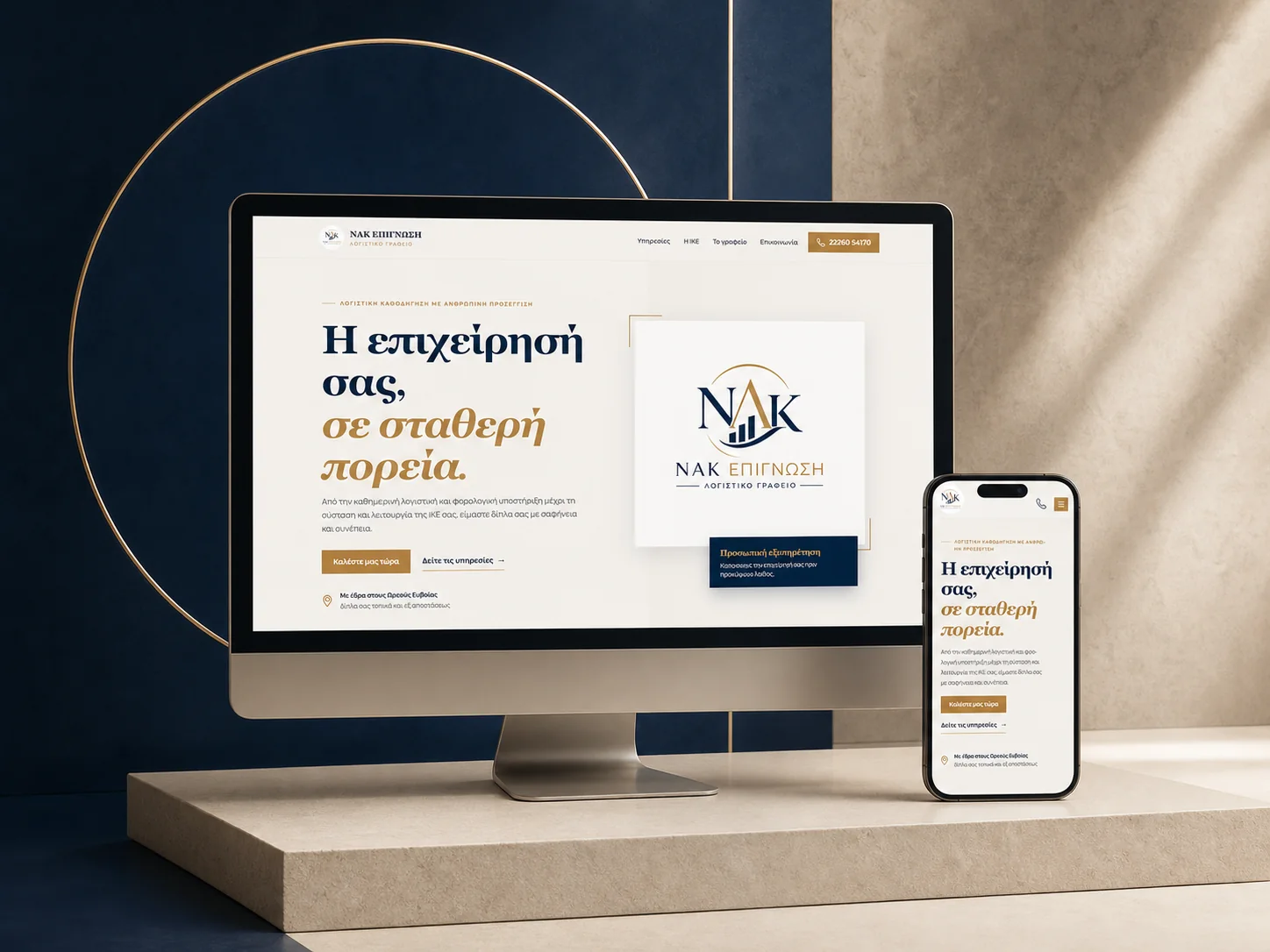 Adjacent work · Professional services
NAK Epignosi
A lightweight one-page structure that presents services, corporate details and direct contact routes clearly.
NAK Epignosi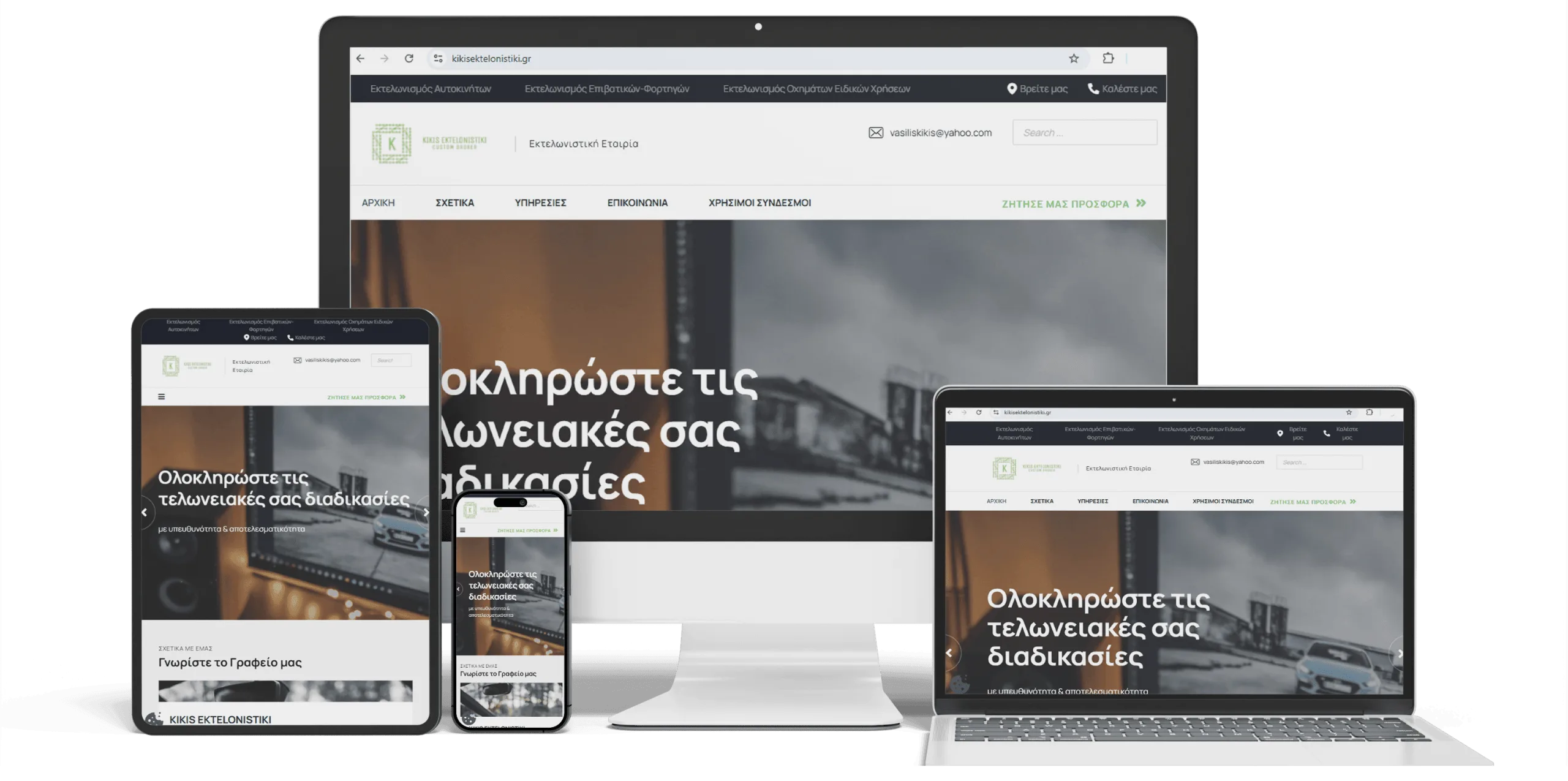 Adjacent work · Regulated information
Kikis Customs Brokerage
Complex professional processes organised for individuals and businesses without overwhelming legal or procedural language.
Kikis Customs BrokerageA CONTROLLED PROCESS
Content is approved before design and reviewed again before publication.
The engagement separates design and development decisions from the firm responsibility for legal services, claims and professional requirements.
- 01
Discovery and scope
We map audiences, practice areas, locations, languages, sources and communication constraints.
- 02
Route and content contract
We define URLs, search intent, source ownership and approval requirements for each material page.
- 03
UX and visual system
We design hierarchy, templates and components that remain serious without becoming anonymous.
- 04
Development and migration
We implement the CMS, migrate useful material and protect canonicals, redirects, metadata and language relationships.
- 05
QA, approval and handover
We test devices, accessibility, forms, privacy, schema and search signals before final approval.
TRUST STANDARDS
Credibility comes from the system, not from a stock image of justice.
Design, content, technical quality and governance work together as one professional signal.
Clear authorship
Analysis identifies who wrote or reviewed it and when it was last updated.
Accessible by default
Typography, contrast, keyboard use, landmarks and forms follow practical accessibility standards.
Secure ownership
Domain, hosting, analytics, forms and administrative accounts remain controlled and documented.
SEO without doorway pages
Every landing page has a distinct purpose and substantive content; we do not multiply pages by changing only a service or place name.
FROM EXPERTISE TO A CLEAR DIGITAL PRESENCE
Let us organise a website that reflects the responsibility of the firm.
Tell us about the practice areas, audiences, languages and initial enquiry process. We will recommend a clear architecture, scope and controlled content workflow.
Discuss the law firm websiteFAQ
Law firm website FAQs
Answers about content, confidentiality, SEO, multilingual publishing and approval responsibility.
What should a law firm website include?
Most firms need a clear identity, practice areas, approved profiles, languages, contact information, useful answers and responsible notices about content and initial enquiries. The final architecture depends on the firm and its audience.
Do you write legal content?
We can provide content strategy, structure, interviews and editorial support. Legal accuracy, professional rules and final approval remain with the law firm or its designated legal author.
Can every practice area have its own page?
Yes, when it serves a genuinely different intent and contains enough useful material. We do not create thin pages that change only a word or location.
How do you protect information submitted by a potential client?
We design minimal fields, secure transmission, controlled recipients, retention and an appropriate notice. Email and a standard form should not automatically be treated as a secure client portal.
Does submitting a form create a lawyer-client relationship?
The design should not imply that it does. The firm approves clear wording about what constitutes an enquiry, when a matter is accepted and what information should not be submitted through the form.
Can the website be multilingual?
Yes. Each language needs a complete approved version, correct canonicals and hreflang, appropriate terminology and an equivalent enquiry journey. Critical legal content should not depend on unreviewed machine translation.
How can SEO and GEO help a law firm?
Through clear architecture, crawlable content, a documented entity, useful answers, authorship, metadata, schema and consistent business information. Nobody can guarantee first position or a citation in an AI-generated answer.
Can we publish articles and legal updates?
Yes, with taxonomy, authorship, publication and review dates, related content and a retirement process when information is no longer current.
Who reviews compliance with professional advertising rules?
The law firm and its qualified advisers. Firstidea applies approved requirements to design, content and functionality but does not provide legal or professional-conduct advice.